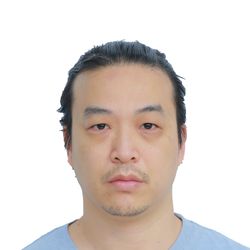
Short Bio
Alexandre Lebel holds a bachelor's degree in anthropology (Université de Montréal, Canada), a master's degree in environmental sciences and management (University of Saint Joseph, Macao SAR), and a doctorate in education (University of Saint Joseph, Macao SAR) and a doctorate in science (University of Saint Joseph, Macao SAR). Alexandre Lebel is interested in ethnolinguistics, semiotics, and cultural preservation. He wrote his doctoral dissertation on the grammar of Macao Creole Portuguese. He is also a professionally qualified technician (CEGEP Saint-Laurent, Canada) in water treatment technologies, with experience in the public and private sectors. In Macao, Alexandre Lebel participated in several environmental science and education projects concerning aquatic pollution and bioremediation strategies. He wrote his doctoral dissertation on developing the marine medaka as a behavioral model organism for studying fish communication in marine ecosystems.
ORCID ID: https://orcid.org/0009-0001-6721-7381
Scopus ID: https://www.scopus.com/authid/detail.uri?authorId=57223930927
Modules
Year 1 Bachelor
This module provides basic theoretical and practical foundations in chemistry. It includes nomenclature, the mole concept and stoichiometry, atomic structure, the periodic table, chemical bonding and bonding theories, solutions, gas laws and thermochemistry, acid/base calculations, titrations, basic chemical equilibrium, atomic and molecular spectroscopic, chromatographic, and electroanalytical methods of analysis. Much of these concepts will be taught by hands-on laboratory demonstrations focusing on modern methods of chemical analysis
Year 2 Bachelor
This module introduces basic concepts of algorithmic problem solving and logical thinking. It covers problem solving strategies, basic data structures, as well as data and procedural abstraction. Through step-by-step practice, students learn basic skills to write their own code in an easy-to-master programming language for simple problem solving, and to perform simple debugging and testing. It serves as the first programming module and requires no prerequisite.
This module will focus on the study of web and multimedia technologies.
The students will be able to understand what is the web, what is multimedia and how do they work. It’s a hands-on module that requires the use of the computer as an artistic and creative tool.
This module will also prepare students, with the basic technical and aesthetical skills, on how to create web and multimedia products with visually dynamic and creative graphics through best working practices. Students will design web pages by using Adobe Photoshop, HTML and CSS files by editing them by using text editors and other tools. Usability principles will be one of the considerations when designing web pages.
Year 3 Bachelor
Students will study and explore the history, geography, culture, religion, architecture, urban development, economy, politics, arts, diversions and everyday life of Macau, through lectures, readings, fieldwork and public communication sessions. Special emphasis will be placed on Macau's relations with surrounding regions.
The main aim of this module is to support students in examining, evaluating and developing their own knowledge about Macau through critical engagement with a wide range of information sources. For students, the module will also represent an opportunity to further develop their reasoning ability, creativity, communication skills (through a variety of media) and their cooperative working capability.
This module will focus on the understanding of the effects and risks of pollutants to biological systems, including human population.
It will begin by studying the major classes of pollutants that can impact health, the environmental sources of these substances, their transport and resilience in the environment and the routes for human and animal exposure to these chemicals.
Basic concepts of toxicology will be reviewed, including dose-response relationships, chemodynamics and chemokinetics. The potential impact on human health will be addressed by reviewing common negative effects on health (e.g. organ toxicity, carcinogenesis, endocrine disruption, neurodevelopmental effects, etc).
The module will also review the existing procedures for monitoring environmental pollutants. Finally, a strong emphasis will be given to risk assessment and to the analytical procedures available for measuring environmental pollutants and for testing the potential negative effects of new pollutants in animal and human health.
Simple laboratory experiments in ecotoxicology will be run in order to provide hands-on training to students.
Year 1 Master
This module aims to introduce students to the different topics and issues related with the Environmental Sciences. They will receive an introductory overview about ecossystems and the importance of natural resources, main pressures facing the global environment, sustainability and sustainable development. Students will learn the main categories of environmental problems as well as understand and discuss the relationship between environment, ethics and economy. Finally, the module will focus on demographic and sociological differences between developed and developing countries. Students will discuss scientific papers, reports and documentaries throughout the module by oral presentations and team work. A field trip to Coloane (Macau) will be conducted at the end of the module where students will experience hands on real data collection for a final project.
This interdisciplinary module will provide training in the most common methods and tools used in environmental projects. The module will start by covering the basic principles of experimental design, data collection and data analysis in different environment-related frameworks. Students will then receive training in common analytical techniques in geo and biochemistry and in Geographical Information Systems (GIS). An enphasis will be put into GIS as their application crosses many fields of Environmental Sciences. The theoretical/practical concepts related to GIS design, development and management and the features of existing GIS software regarding its capability of analysis of spatial data will be presented. Students will be trained in space modelation and surveillance of spatial error, geo-databases concepts, vector/raster representation, 3D/network analysis, geostatistics and remote sensing.
This module focuses on issues and concerns regarding pollution and waste management in today’s cities. It includes topics on sources, identification and characterization of pollutants, effects of pollutants on the physical and natural environment and on public health, abatement techniques, control and management of pollution. Different sources and types of wastes and the corresponding methods of management will be assessed and compared. This will be complemented by visits to facilities such as the Macao Incineration Plant and Macao Waste Water Treatment Plant. Environment-friendly waste management strategies such as reduction, recycling and reuse are evaluated in terms of their use/application in the region. Existing rules and regulations in Macao, Hong Kong, China and other countries, regarding pollution monitoring and control, environmental sanitation, solid and liquid waste management, quality control and standards are also included. Students are expected to develop a conceptual plan or proposal for pollution and waste management in Macao, Hong Kong or a city of their choice at the end of the module.