Short Bio
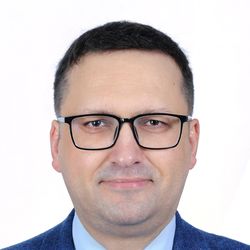
My name is Jarosław Marek Duraj, S.J. I come from Poland. I majored in philosophy (Cracow) and theology (Warsaw). Later, I earned a postgraduate licentiate (S.T.L) in Missiology at the Pontifical Gregorian University in Rome, after which I pursued Mandarin Chinese language studies, first in Taipei, and then in Beijing. In 2008, I obtained an M.A. in Buddhist Studies (with distinction) from the University of Hong Kong. Moreover, I pursued postgraduate research on Chinese Buddhism at the School of Oriental and African Studies (SOAS) in London. In 2017, I earned my Ph.D. in political philosophy from the Pontifical Gregorian University (PUG) in Rome. Currently, based in Macau, I work at the Macau Ricci Institute (MRI) and as an Assistant Professor in the Faculty of Religious Studies and Philosophy at the University of St. Joseph (USJ). My research interests focus on political philosophy, interreligious dialogue, intercultural philosophy, missiology, sinology, and Buddhology. I am the author of The Role of Metaxy in the Political Philosophy of Eric Voegelin (New York: Peter Lang, 2021).
ORCID: 0000-0002-9350-0324
https://orcid.org/0000-0002-9350-0324
ResearchGate
https://www.researchgate.net/profile/Jaroslaw-Duraj
Publications
Books:
The Role of Metaxy in the Political Philosophy of Eric Voegelin (New York: Peter Lang, 2021). https://www.peterlang.com/document/1059159
Book Chapters:
"The Buddhist Perspective on Human Rights." In: Migration and Human Rights (Migración y Derechos Humanos), Piotr Ryguła (Ed.), pp. 47-75. Warszawa: Wydawnictwo Naukowe UKSW, 2024.
ISBN: 978-83-8281-534-4 (printed version); 978-83-8281-535-1 (electronic version)
“Zen-Ignatian Training Program in Japan: A Personal Experience” (Chapter 1). In The Wheel & The Cross. An Anthology by Jesuits & Friends on Buddhism and Dialogue, edited by Cyril Veliath, SJ, pp. 1-23. Published on behalf of the JCAP Buddhist Studies & Dialogue Group by MAGGA Jesuit Research Center, Phnom Penh & Manila, 2021.
Available at: https://jcapsj.org/wp-content/uploads/1/2021/12/The-Wheel-The-Cross.pdf
“The Metaxological Philosophy of Dialogue with Buddhism” (Chapter 14). In The Wheel & The Cross. An Anthology by Jesuits & Friends on Buddhism and Dialogue, edited by Cyril Veliath, SJ, pp. 177-198. Published on behalf of the JCAP Buddhist Studies & Dialogue Group by MAGGA Jesuit Research Center, Phnom Penh & Manila, 2021.
Available at: https://jcapsj.org/wp-content/uploads/1/2021/12/The-Wheel-The-Cross.pdf
“Re-thinking Chinese Ecumene in the Global Age” (Chapter 1). In Eric Voegelin’s Asian Political Thought, ed. Lee Trepanier, 9-27. Lanham, MD: Rowman & Littlefield Publishing Group, Inc., 2020.
Articles:
“Dialogue Between Wisdom Traditions: A Contribution of Yves Raguin, S.J. 智慧传统之间的对话 :甘易逢 (Yves Raguin, S.J.)的贡献,” The Macau Ricci Institute Journal (澳門利氏學社學刊) Issue Thirteen, 2024.10 (第13期): 48-63.
"Becoming Chinese with the Chinese: The Missionary Contribution of Matteo Ricci (Menjadi Tionghoa bersama Orang Tionghoa: Kontribusi Matteo Ricci dalam Evangelisasi)," Diskursus, Volume 20, Nomor 1, April 2024: 33-55. DOI: https://doi.org/10.36383/diskursus.v20i1.543
Semel Eligenti, Quotidie Eligere Debeo: Metanoia of a Missionary, O'Clarim (English Monthly Edition No. 16) Year 76 (26.01.2024), p. 5.
"Benedykt XVI a Kościół katolicki w Chinach" (Benedict XVI and the Catholic Church in China), DEON (3 January 2023) https://deon.pl/kosciol/benedykt-xvi-a-kosciol-katolicki-w-chinach,2381426
“Bodhidharma i początki szkoły buddyzmu chan,” (Bodhidharma and the Origin of Chan School of Buddhism), Chiny Dzisiaj, Rok XV, Numer 1 (2022): 32-34. https://www.chinydzisiaj.sinicum.pl/media/numery/numer1-2022.pdf
“Transformacja buddyzmu w kontekście chińskim,” (Transformation of Buddhism in the Chinese Context), Chiny Dzisiaj, Rok XV, Numer 1 (2022): 40-46. https://www.chinydzisiaj.sinicum.pl/media/numery/numer1-2022.pdf
“Narodziny buddyzmu humanistycznego na Tajwanie: Mistrz Shengyan i szkoła Góry Bębna Dharmy,” (Emergence of Humanistic Buddhism in Taiwan: Master Shengyan and the School of Dharma Drum Mountain), Chiny Dzisiaj, Rok XV, Numer 2 (2022): 55-63. https://chinydzisiaj.sinicum.pl/media/numery/numer2-2022.pdf
“The Role of Metaxy in the Political Philosophy of Eric Voegelin,” Studia Bobolanum 29 Nr 4 (2018): 127-145.
“The Hermeneutics of Metaxy in the Philosophy of Plato,” Studia Bobolanum 28 nr 4 (2017): 5-22.
Public Forum Talks:
“Fr. Yves Raguin, S.J. and Interreligious Dialogue,” Macau Ricci Institute Public Forum, University of Saint Joseph, Macau (11 December 2023).
“Contemplation and Leadership: In the Footsteps of Fr. Yves Raguin, S.J.,” Macau Ricci Institute Public Forum, University of Saint Joseph, Macau (5 May 2021).
Conference Papers/Lectures:
“Re-thinking Chinese Ecumene in the Global Age,” The Unity of Mankind and the Conversation of Civilizations. Reflections on the Basis of Eric Voegelin's “The Ecumenic Age” at Ludwig Maximilian University of Munich, Germany (1-2 December 2023).
“Spirituality, Chinese Culture, and Interfaith Dialogue,” Round Table Conversation with the representatives of five different religions during International Symposium on “Spirituality, Culture, and Chinese Societies: Interdisciplinary and Interfaith Dialogues,” at The Chinese University of Hong Kong (CUHK), Hong Kong, China (6-7 October 2023).
“El Cristianismo en China Hoy” (The Catholic Church in China Today), Casa de Oración San Ignacio, Chihuahua, Mexico (9 December 2021).
“Between Pleroma and Sunyata: Yves Raguin and the Dialogue with Buddhism,” In Actione Contemplativus”: Contemplation, Mission and Martyrdom. A symposium organized by the Ricci Institutes of Macau, Taipei and the University of Saint Joseph, Macau (17-18 October 2019).
"Re-considering Chinese Ecumene in the Global Age," One Belt One Road Conference Annual Symposium organized by Macau Ricci Institute at USJ, Macau (22-23 November 2018).
“Jesuit Contribution to Dialogue with Buddhism in Contemporary China” presented during the conference: Between Knowledge and Evangelization: Symposium of Publishing Mission of Sinological Institution and Publishing Institutions sponsored by Catholic Church (專業與福傳之間: 專業漢學機構與天主教會創辦出版機構國際會議) at Fu Jen Academia Catholica, Xinzhuang, Fu Jen Catholic University, Taiwan (2 May 2018).
Interviews:
“Czekając na dobre owoce” (Waiting for Good Fruits. Interview about the situation of Chinese Catholics and about the consequences of the Sino-Vatican agreement), Gość Niedzielny, Numer 33 (August 2022).
“Inter-religiosidade da Rota da Seda não pode ser esquecida,” (21 September 2018), “The interreligiosity of the Silk Road cannot be forgotten,” interview with O’Clarim (28 September 2018).
Translations:
張文儒, 『梁漱溟與佛學』, Zhang Wenru, “Liang Shuming and Buddhist Studies,” translated from Chinese into English by Jarosław Duraj, in Thierry Meynard, ed., Liang Shuming’s Thought and Its Reception, Contemporary Chinese Thought, Armonk, NY: M.E. Sharpe, vol. 40, no. 3, Spring 2009, 67-82.
Modules
Year 1 Bachelor
Students will be introduced to an understanding of modernity, through the discussion of topics such as: the Renaissance; precursors of modernity; classic systems of the 18th century: rationalism and empiricism; the Enlightenment and the crisis of the European conscience; proposals and critiques of German Idealism.
This course introduces students to the general panorama of philosophical thought after Hegel. Students will study the philosophical thought and the most prominent philosophers of the 19th century, and of the 20th century, with particular emphasis on Phenomenology, the philosophy of Values, Hermeneutics; the philosophies of existence and the philosophy of sciences. Other topics include current versions of Personalism and Thomism.
Alternative Description:
This course is a continuation of History of Modern Philosophy and focuses mainly on European philosophy. It intends to offer an overview of the history of European contemporary philosophy through the study of its most important movements from the very end of the 19th Century to the beginning of the 21st Century. Philosophers such as Hegel, Kierkegaard, Wittgenstein, Habermas and concepts such as Pragmatism, (neo)Positivism, Phenomenology; Structuralism, Existentialism, Postmodernism to name but just a few will be studied in this class. This course thus provides a survey of the traditions, problems and ideas that shaped the 20th century. That century being one of tremendous and traumatic changes, which will alter our consciousness of the world, will lead us, in both the 20th and 21st centuries, to re-consider time, being, subjectivity, knowledge and history.Year 2 Bachelor
The modern period in philosophy stretches roughly from 1400 to 1800, and is linked in an innovative and fruitful way with the classical and the medieval period of philosophy. During this time gradually philosophy became relatively speaking more autonomous in relation to theology, which led also to the emergence and development of modern science, which also developed in various disciples. Thus, Modern Philosophy is also the attempt to come to terms with the intellectual implications of the Scientific Revolution and the new place of humans and societies within a changing context. It moves from the massive confidence of the first scientists in the human ability to solve scientific issues to the scepticism of Hume and Kant. The metaphysical, epistemological, ethical and political aspects of modern thought will be thoroughly considered throughout this module, especially in relation to the development of scientific knowledge and the ensuing modern transformations of Western and global societies (e.g. Scientific and Industrial Revolution). We will study and analyse basic and representative texts of this period, and pay close attention to their respective argumentative structures, and highlight their logical development of problems and answers.
This course is a continuation of History of Modern Philosophy and focuses mainly on European philosophy. It intends to offer an overview of the history of European contemporary philosophy through the study of its most important movements from the very end of the 19th Century to the beginning of the 21st Century. Philosophers such as Shopenhauer, Marx, Kierkegaard, Nietzsche, Heidegger, Husserl, Gadamer, Ricoeur, Wittgenstein, Habermas, Derrida and concepts such as Pragmatism, (neo)Positivism, Phenomenology, Existentialism, Hermeneutics, Structuralism, Postmodernism to name but just a few will be studied in this class. This course thus provides a survey of the traditions, problems and ideas that shaped the 20th century. That century being one of tremendous and traumatic changes, which will alter our consciousness of the world, will lead us, in both the 20th and 21st centuries, to re-consider time, being, subjectivity, knowledge and history.
This course intends to offer an overview of the history of European modern philosophy and the rise of the modern mind through the study of the most important thinkers of the XVIIth and XVIIIth centuries. Philosophers such as Descartes, the father of modern philosophy, Spinoza, Leibniz and Kant, to name just a few will be studied in this class. In reading excerpts of their most important texts, we shall consider how those philosophers shared one essential feature, Individualism.
Year 3 Bachelor
An Introduction to various political thoughts and forms of governments. Students will discuss the concept of democracy in comparison to other political thoughts or styles of governing. The contemporary local political situations and trends will be referred.
Alternative Description:
An Introduction to various political thoughts and forms of governments. Students will discuss the concept of democracy in comparison to other political thoughts or styles of governing. The contemporary local political situations and trends will be referred.
Year 4 Bachelor
This course is a theological exploration of Hinduism, Buddhism, Taoism, Judaism, Islam and the relationship of Christianity to those religions. The goal of this exploration is specifically: (a) to set forth the essential characteristics of the world’s great religions; (b) to disengage the essential differences between Christianity and the other world religions; (c) to identify the distinctiveness of Catholicism within the family of Christian traditions; (d) to examine historically and systematically the Christian theological appraisal of other world religions. The ultimate goal of this course is to enable students to gain a deeper understanding of Christianity by passing over into and experiencing as well as appraising the different major religious traditions of the world. To enhance the learning experience, the course will make abundant use of films and fieldwork.
Alternative Description:
The course introduces the students to interreligious or interfaith dialogue. It offers a theological reflection on the nature of religion and dialogue. The first part gives an overview of the context of interfaith dialogue – specifically Asia and the Pacific where the cosmic and metacosmic religions are very much part of the lives of the people. The second part is an introduction to selected religions, namely: Traditional Religion, Hinduism, Buddhism, Confucianism, Taoism, and Islam. Part three is a discussion of dialogue and the Church’s teaching on interfaith dialogue. The course ends with a more focused discussion on the themes of dialogue especially in Hinduism, Buddhism, and Islam.
Alternative Description:
This course is a theological exploration of Hinduism, Buddhism, Taoism, Judaism, Islam and the relationship of Christianity to those religions. The goal of this exploration is specifically: (a) to set forth the essential characteristics of the world’s great religions; (b) to disengage the essential differences between Christianity and the other world religions; (c) to identify the distinctiveness of Catholicism within the family of Christian traditions; (d) to examine historically and systematically the Christian theological appraisal of other world religions. The ultimate goal of this course is to enable students to gain a deeper understanding of Christianity by passing over into and experiencing as well as appraising the different major religious traditions of the world. To enhance the learning experience, the course will make abundant use of films and fieldwork. This course is an exploration of current issues facing the Catholic Church and other Christian communities globally. Possible topics to be included are: north-south political and economic tensions, post-colonialism and globalization, religious and cultural pluralism, the environmental crisis, contextualization/inculturation, Christian unity and ecumenism. Contemporary debates and developments will be treated in view of their biblical, historical, and theological backgrounds. The realities of the Church in the Two-Thirds World will be considered. Voices from Africa, Asia, Latin America, and the Pacific will be primary sources. Pastoral implications for Christian leadership with global perspective will be stressed.
Alternative Description:
This course is an exploration of current issues facing the Catholic Church and other Christian communities globally. Possible topics to be included are: north-south political and economic tensions, post-colonialism and globalization, religious and cultural pluralism, the environmental crisis, contextualization/inculturation, Christian unity and ecumenism. Contemporary debates and developments will be treated in view of their biblical, historical, and theological backgrounds. The realities of the Church in the Two-Thirds World will be considered. Voices from Africa, Asia, Latin America, and the Pacific will be primary sources. Pastoral implications for Christian leadership with global perspective will be stressed.
Alternative Description:
This course is an exploration of current issues facing the Catholic Church and other Christian communities globally. Possible topics to be included are: north-south political and economic tensions, post-colonialism and globalization, religious and cultural pluralism, the environmental crisis, contextualization/inculturation, Christian unity and ecumenism. Contemporary debates and developments will be treated in view of their biblical, historical, and theological backgrounds. The realities of the Church in the Two-Thirds World will be considered. Voices from Africa, Asia, Latin America, and the Pacific will be primary sources. Pastoral implications for Christian leadership with global perspective will be stressed. This course will explore changing views of Christian mission in the post-modern, post-colonial age. Different understanding of mission, including evangelism, development, social justice, presence, inter-religious dialogue, and church-growth will be considered in their historical contexts. Sources will include major western mission thinkers and voices from Africa, Asia, Latin America, and the Pacific.
Year 5 Bachelor
This course is a survey of Christian understandings of war, peace, and revolution from the time of Christ and the early church to the present. Emphasis will be placed on the way in which theological convictions in the areas of Christology, pneumatology, eschatology, ecclesiology, and so on, have shaped Christian Teaching on the nature of peace and the permissibility of using violence. Cases will be used to examine certain aspects of just war theory, with the purpose of addressing the question: is just war theory applicable to warfare in the era of the modern nation state? Other issues discussed will include the military chaplaincy, the role of Christian churches in mobilizing for war, and the use of violence in revolution. Texts will include: Reinhold Niebuhr, Moral man and immoral society; John Howard Yoder, Christian attitudes toward war, peace and revolution: A companion to Bainton; US Catholic Bishops, The challenge of peace, and others.
Alternative Description:
This course is a survey of Christian understandings of war, peace, and revolution from the time of Christ and the early church to the present. Emphasis will be placed on the way in which theological convictions in the areas of Christology, pneumatology, eschatology, ecclesiology, and so on, have shaped Christian Teaching on the nature of peace and the permissibility of using violence. Cases will be used to examine certain aspects of just war theory, with the purpose of addressing the question: is just war theory applicable to warfare in the era of the modern nation state? Other issues discussed will include the military chaplaincy, the role of Christian churches in mobilizing for war, and the use of violence in revolution. Texts will include: Reinhold Niebuhr, Moral man and immoral society; John Howard Yoder, Christian attitudes toward war, peace and revolution: A companion to Bainton; US Catholic Bishops, The challenge of peace, and others. Year 1 Master
The aim of this course is to give a comprehensive and intercultural understanding of hermeneutics as well as a methodological foundation for research in cross-cultural philosophy. It intends to examine and discuss the philosophical borrowings from one cuture to another through the study of the most important thinkers.