
USJ’S Architecture Master Projects 2025 featured in April issue of AM MAGAZINE
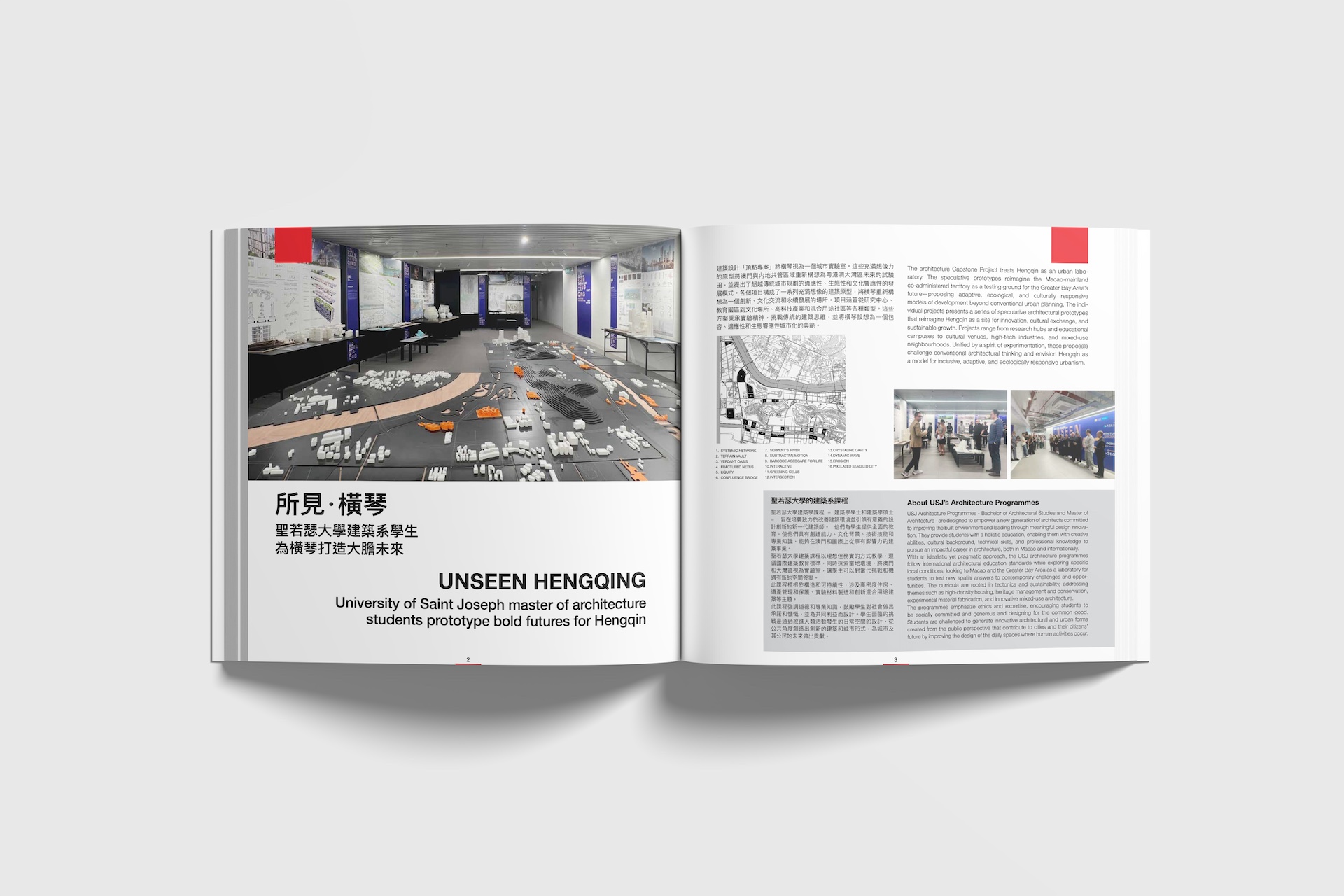
USJ’S Architecture Master Projects 2025 featured in April issue of AM MAGAZINE
02
Jun
02/06/2026
USJ’s Master of Architecture Projects of 2025, developed under the theme Unseen Hengqin – Prototyping the Future of the Great Bay Area, were featured in the latest issue of Architecture Macau (AM) Magazine.
The University of Saint Joseph (USJ) Master of Architecture Projects of 2025, developed under the theme Unseen Hengqin – Prototyping the Future of the Great Bay Area and where students explored Hengqin’s role as a testing ground for new models of urban development in the context of the Greater Bay Area (GBA), were featured in the latest issue of Architecture Macau (AM) Magazine.
Last year’s Master of Architecture projects were featured in the latest issue (April 2026) of the Architecture Macau (AM) Magazine. Focusing on Hengqin – a territory co-administered by Macao and mainland China – the projects were developed under the Unseen Hengqin – Prototyping the Future of the Great Bay Area theme where students developed speculative architectural prototypes that reimagine Hengqin as a site for innovation, cultural exchange, and sustainable growth.
The UNSEEN HENGQIN exhibition was part of the Master Show 2025 – “UNSEEN MACAO” , held last year in June and July at the Kent Wong Gallery – Basement at USJ. The exhibition displayed studio projects of the Master of Architecture and Master of Design students from the 2024-2025 academic year.
Organised annually by the Department of Architecture and Design of the Faculty of Arts and Humanities of the University of Saint Joseph (USJ), the exhibition showcases the 1st-year projects of the Master of Architecture students.
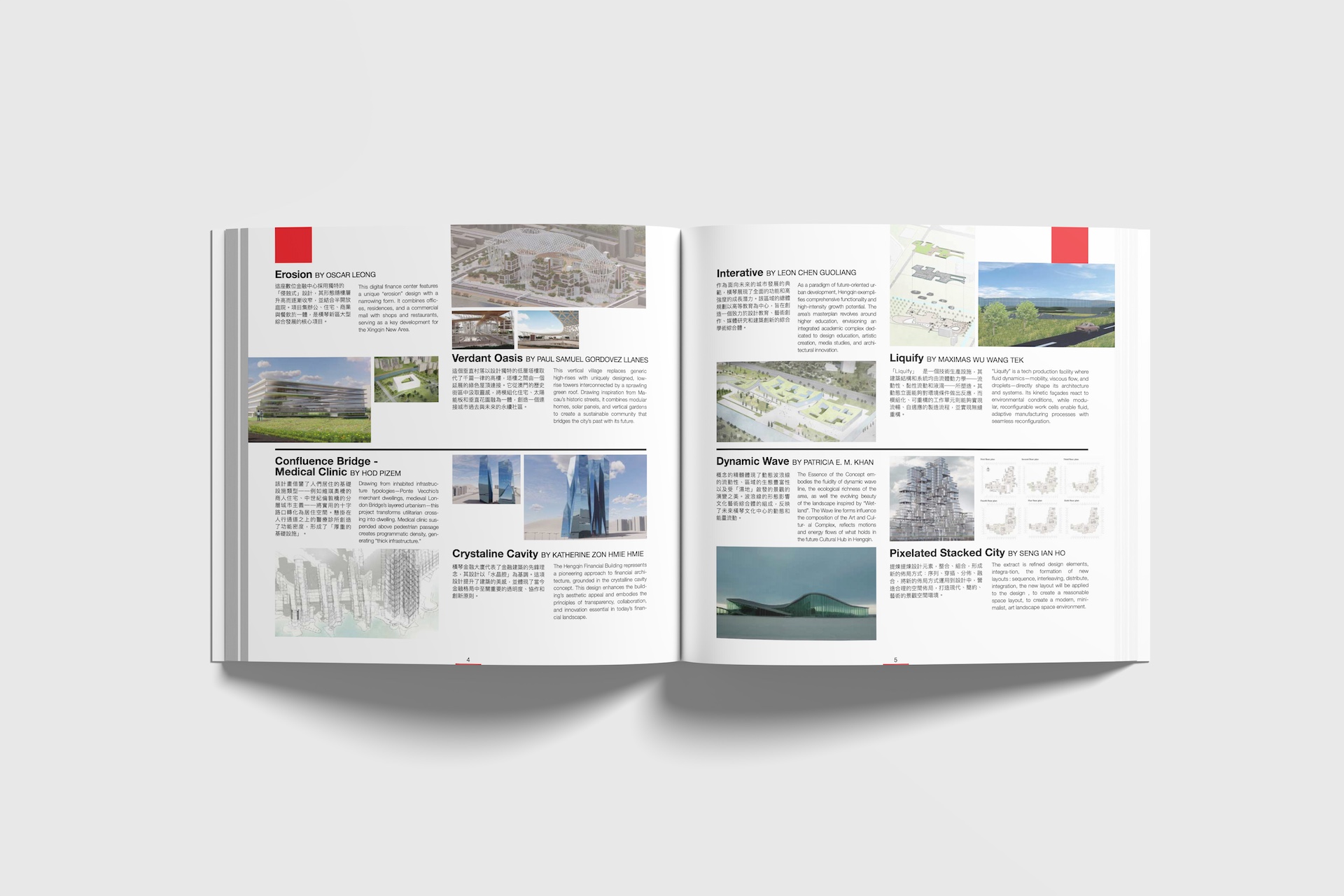
Erosion (Oscar Leong), Verdant Oasis (Paul Samuel Gordovez Llanes), Confluence Bridge – Medical Clinic (Hod Pizem), Crystaline Cavity (Katherine Zon Hmie Hmie), Interative (Leon Chen Guoliang), Liquify (Maximas Wu Wang Tek), Dynamic Wave (Patricia E. M. Khan), Pixelated Stacked City (Seng Ian Ho), featured on AM April 2026
The Master of Architecture studio projects, supervised by Prof. Nuno Soares, range from research hubs and educational campuses to cultural venues, high-tech industries, and mixed-use neighbourhoods. Unified by a spirit of experimentation, these proposals challenge conventional architectural thinking and envision Hengqin as a model for inclusive, adaptive, and ecologically responsive urbanism. Together, they position Hengqin not just as a development zone, but as a platform for future-making at the intersection of regional ambition and local identity.
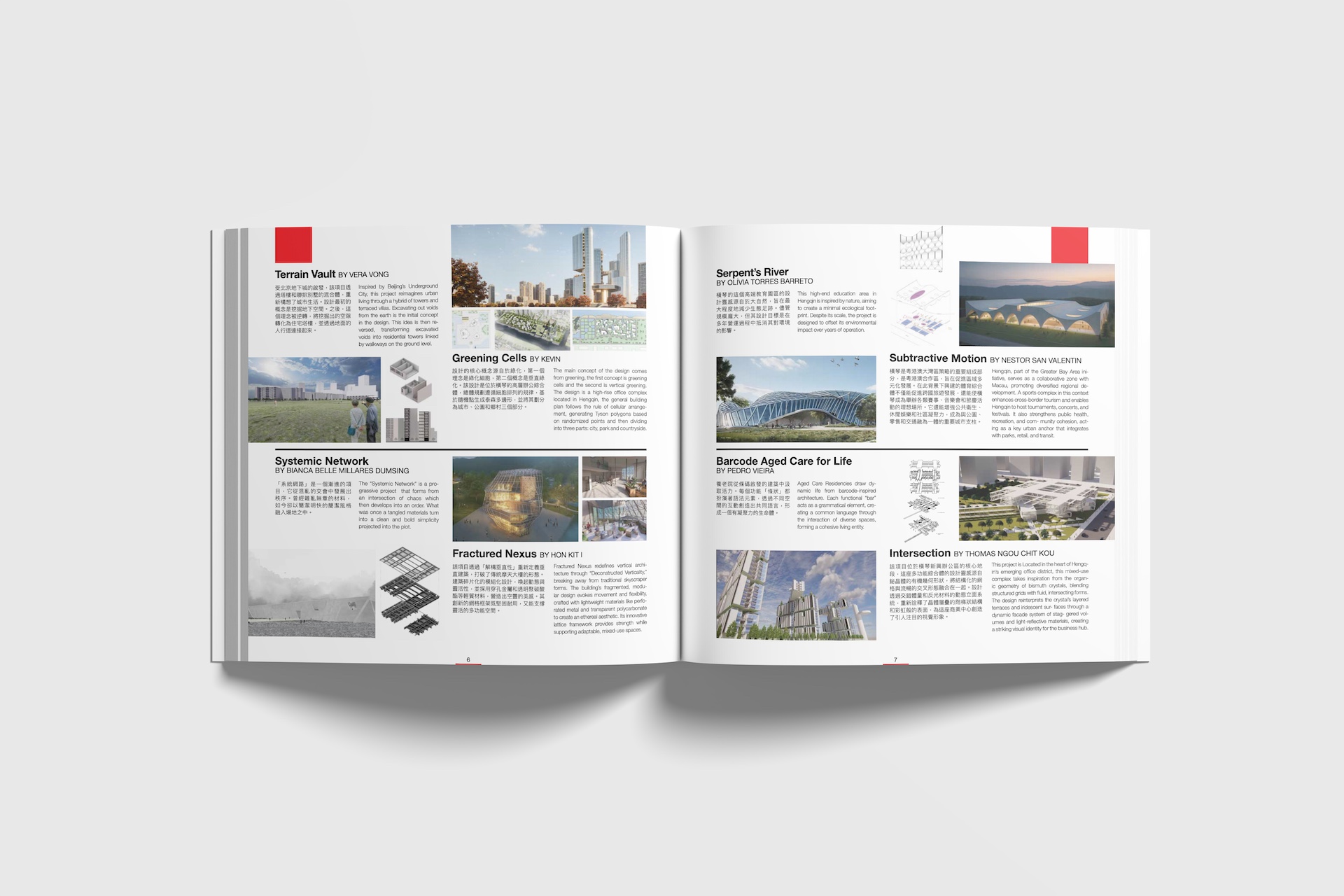
Terrain Vault (Vera Vong), Greening Cells (Kevin Xiao), Systemic Network (Bianca Belle Millares Dumsing), Fractured Nexus (Hon Kit I), Serpent’s River (Olívia Torres Barreto), Subtractive Motion (Nestor San Valentin), Barcode Aged Care for Life (Pedro Vieira), Intersection (Thomas Ngou Chit Kou), featured on AM April 2026
Architecture Macau (AM) is the publication of AAM, Architects Association of Macau. First published in the mid-90s, it is currently the only editorial project in Macao fully dedicated to architecture, interior design and urban planning.
About USJ’s Architecture Programmes:
The University of Saint Joseph’s (USJ) Architecture Programmes – Bachelor of Architectural Studies and Master of Architecture – are designed to empower a new generation of architects committed to improving the built environment and leading through meaningful design innovation. They provide students with a holistic education, enabling them with creative abilities, cultural background, technical skills, and professional knowledge to pursue an impactful career in architecture, both in Macao and internationally. With an idealistic yet pragmatic approach, the USJ architecture programmes follow international architectural education standards while exploring specific local conditions, looking to Macao and the Greater Bay Area as a laboratory for students to test new spatial answers to contemporary challenges and opportunities. The curricula are rooted in tectonics and sustainability, addressing themes such as high-density housing, heritage management and conservation, experimental material fabrication, and innovative mixed-use architecture.
The programmes emphasise ethics and expertise, encouraging students to be socially committed and generous and designing for the common good.
Students are challenged to generate innovative architectural and urban forms created from the public perspective that contribute to cities and their citizens’ future by improving the design of the daily spaces where human activities occur.