Institute for Data Engineering and Science
Dean’s Message
Welcome to the Institute for Data Engineering and Sciences (IDEAS), which is a research and development institute at the University of Saint Joseph (USJ).
Data sciences and engineering develop data-centric solutions, algorithms, and theories for advanced, up-to-date engineering, business, medical, and scientific data analytics for solving engineering, science, and societal problems.
The essence of education lies in giving people the ability to define beauty and the will to realize it. Here, the Institute for Data Engineering and Sciences (IDEAS) at USJ pursues our core mission of teaching, training, and research, in the interest of the public good. We offer comprehensive curricula in postgraduate programmes, projects, and post-doc research, to provide students with a vibrant and diverse environment to fully develop their potential and to cultivate top innovative talents with a global perspective, with the aim at nurturing and producing present and future data scientists and data engineers of the highest quality. The Institute provides a solid foundation in data science for students with specialized domain knowledge, such as smart elderly care, business analytics, financial technology (Fintech), smart tourism, health informatics, and smart city technology. We use and teach data analytics and artificial intelligence for the development and benefit of society.
The world-class faculty is the foundation of IDEAS. We work closely with the USJ faculties and industrial partners. Additionally, many adjunct professors in IDEAS come from top universities in the world and are international leaders in their respective fields.
USJ is a deliberately small, bijou university. However, it is really big in its scope, specialisms, ideas and excellence. It is one of the few places in the world big enough to hold so many dreams, big and small, boundless and even “unbridled”. Here we pursue the dreamers; we believe that good dreams lead to positive attitudes, and positive attitudes lead to positive results. We hold to that dream in all our work. So, onward! We have work to do and more challenges to meet. We strive to do better and better. Join us in this important work!
Recent Publications by the Institute for Data Engineering and Sciences
- Wang, H., Wen, F., Wang, X., Du, W. and Gui, G., 2025. Hierarchical channel estimation for near-field spatial non-stationary channels: A pre-selection and multi-level dynamic threshold strategy. IEEE Transactions on Cognitive Communications and Networking.
- Wang, H., Yan, T., Zhou, N., Li, X., Wen, F. and Du, W., 2025. Enhanced polar-domain channel estimation for near-field XL-MIMO in low-SNR scenarios. IEEE Transactions on Vehicular Technology.
- Wang, H., Chen, Q., Wang, X., Du, W., Li, X. and Nallanathan, A., 2024. Adaptive Block Sparse Backtracking Based Channel Estimation for Massive MIMO-OTFS Systems. IEEE Internet of Things Journal.
- Liang, S., Chen, T., Ma, J., Ren, S., Lu, X. and Du, W., 2024. Identification of mild cognitive impairment using multimodal 3D imaging data and graph convolutional networks. Physics in Medicine & Biology, 69(23), p.235002.
- Nizamani, A.H., Chen, Z., Nizamani, A.A., Bhatti, M.A., Ma, H. and Du, W., 2024, December. Trans-EffNet: A Hybrid Model for Brain Tumor Detection Using EfficientNet and Transformer Encoder. In 2024 IEEE Smart World Congress (SWC) (pp. 1687-1692). IEEE
- X. Wu, J. Shi, C. Chen, Q. Qian, J. Dai, NLMSA: Towards structure-aware image inpainting using nested linear and multi-scale attention, Neurocomputing, Volume 666 (2026) 132292.
- X. Huang, G. Chen, L. Wu, Y. Zou, L. Zhang, S, Li, K. Li, Z. Jiang. Y. ZHang. X. Chen, W. Shum, J. Dai, H. Huang, M. Moses, X. Wu, Y. Wang, T. Jiang, Z. He, Q.Guo, W. Xue, H. Li, C. Chen, Coordinated regulation of pH alkalinization by two transcription factors promotes fungal commensalism and pathogenicity, Nature Communications, Volume 16, article number 7855, (2025)
- I. Arraut, MOND formulation emerging from General Relativity, Mod.Phys.Lett.A 40 (2025) 30, 2550125.
- I. Arraut, Solving the Dark Energy problem via Symmetry constraints, Eur.Phys.J.C 85 (2025) 5, 475.
- I. Arraut, Local Equivalence of the Black–Scholes and Merton–Garman Equations, Axioms 14 (2025) 3, 215.
List of Programmes
Doctoral Programme
Faculty Members
Faculty Members

Vice-Rector | Coordinator of the Laboratory for Applied Neurosciences | Coordinator of the Master of Business Analytics
Vice-Rector for Research and Innovation. Full Professor. Founder of the Laboratory of Applied Neurosciences (LAN/USJ). President of the Board of Directors of the Macau Spin Incubation Center / USJ. Chief Academic Advisor of the National Research Base of Intelligent Manufacturing Services at Chongqing Technology and Business University, China. Honorary Research Fellow at the University of Leicester - UK. Visiting Associate Professor at the University of the Chinese Academy of Sciences (UCAS) - Shenzhen Institutes of Advanced Technologies (SIAT). Advisor of the Macau Startup Club. PhD in Engineering Federal University of Ceará (2010). Associate Professor and Software Department Chief at University Gregorio Semedo (UGS), Angola (2016). Associate Professor at University Lusiada of Angola (2009-2015). Master in Artificial Intelligence UFC (2007). Electrical Engineering UFC (1996). Has large experience in Project Management, Artificial Intelligence, Bioengineering, and Applied Computer Science, focusing on signal processing. RESEARCH AREAS - Neuroscience applied to management (marketing, leadership, performance) - Business Analytics - Big Data Applications - Theory of Constraints - Project management (frameworks, approaches, risk analysis techniques) - Digital Signal Processing - Bioengineering / Computer-Aided Diagnostic Systems - Artificial Intelligence - Deep Learning - Nonlinear analysis and dynamic systems.
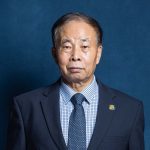
Dean of the Institute for Data Engineering and Sciences | Professor
Professor George, Wencai DuOfficial Title: DeanFaculty: Institute for Data Engineering and SciencesEmail: george.du@usj.edu.moShort
BioProfessor Dr. George Du is the Dean and Director of the
Institute of Data Engineering and Sciences (IDEAS). He earned his bachelor’s
degree from Peking University in 1978 and two master’s degrees from Hohai
University in 1986 and Computer Sciences from Twente University, the Netherlands, in 1996,
respectively. George Du registered for his doctoral studies at the University
of Adelaide in 1996, then transferred his studies to the University of
Queensland, finally earning his Ph.D. in Informatics from Adelaide University.
He conducted Post-doctoral research in Computer Science at the Israel
Institute of Technology (IIT). George Du was Chair Professor (2017-2021) and Founding
Director of the Institute of Data Science (Now School of Data Sciences) at
the City University of Macau (2017-2019) and Founding Director of the Macao Big
Data Research Centre for Urban Governance (2017-2021). During his tenure at
City University, Chair Professor Du created and taught Master’s and doctoral
programs in Data Science and worked on advanced research projects with
specialist teams and post-doctoral staff.Before joining City University, Professor Du Wencai served
as the dean of the College of Information Science and Technology at Hainan
University for 13 years. He was the first to propose the academic term
"Maritime Communication" and initiated research in this field. In
2009, he led the approval of the first-level discipline of the
PhD in Information and Communication Engineering by the
Ministry of Education of China and served as the responsible professor. He also
held the position of director of the Hainan Provincial Marine Communication and
Network Engineering Research Center (2005-2019).His main research areas include computer sciences,
communication and information systems, data sciences, and artificial
intelligence, recently, with special interest in data-driven modelling, machine
learning, smart elderly care, and data analytics. He has published over 200
academic articles in national and international journals and international
conference proceedings published 20 books and 6 book chapters in the last 15
years, and earned one
international invention patent and 15 national invention patents.Du’s national leadership activities include serving as a Member
of the Selection Committee for the China State Natural Science Award
(2013-present), a Member of the
Selection Committee for the China State Technological Invention Award
(2013-present), Chair of the Hainan Electronics
Society (2005-2015),Chief Data Scientist in the Smart City Professional Association of
China since 2019 and Vice-President of the AI Society of the Greater Bay Area since
2019.Professor Du has been an external reviewer for more than 30
national and international journals and as Editor of more
than twenty international journals and international
conference proceedings. He has chaired nine IEEE international conferences and
has been invited to give more than 20 keynotes at IEEE international
conferences.
Last Updated: January 22, 2026 at 3:05 pm