USJ Publishes Design for the City, a Book of Student Design and Research on Macao
USJ Publishes Design for the City, a Book of Student Design and Research on Macao
31
Aug
31/08/2026
The publication, edited by Prof. Filipa Simões, presents a selection of capstone projects from the Bachelor of Design, each proceeding from fieldwork in the city to a working prototype.
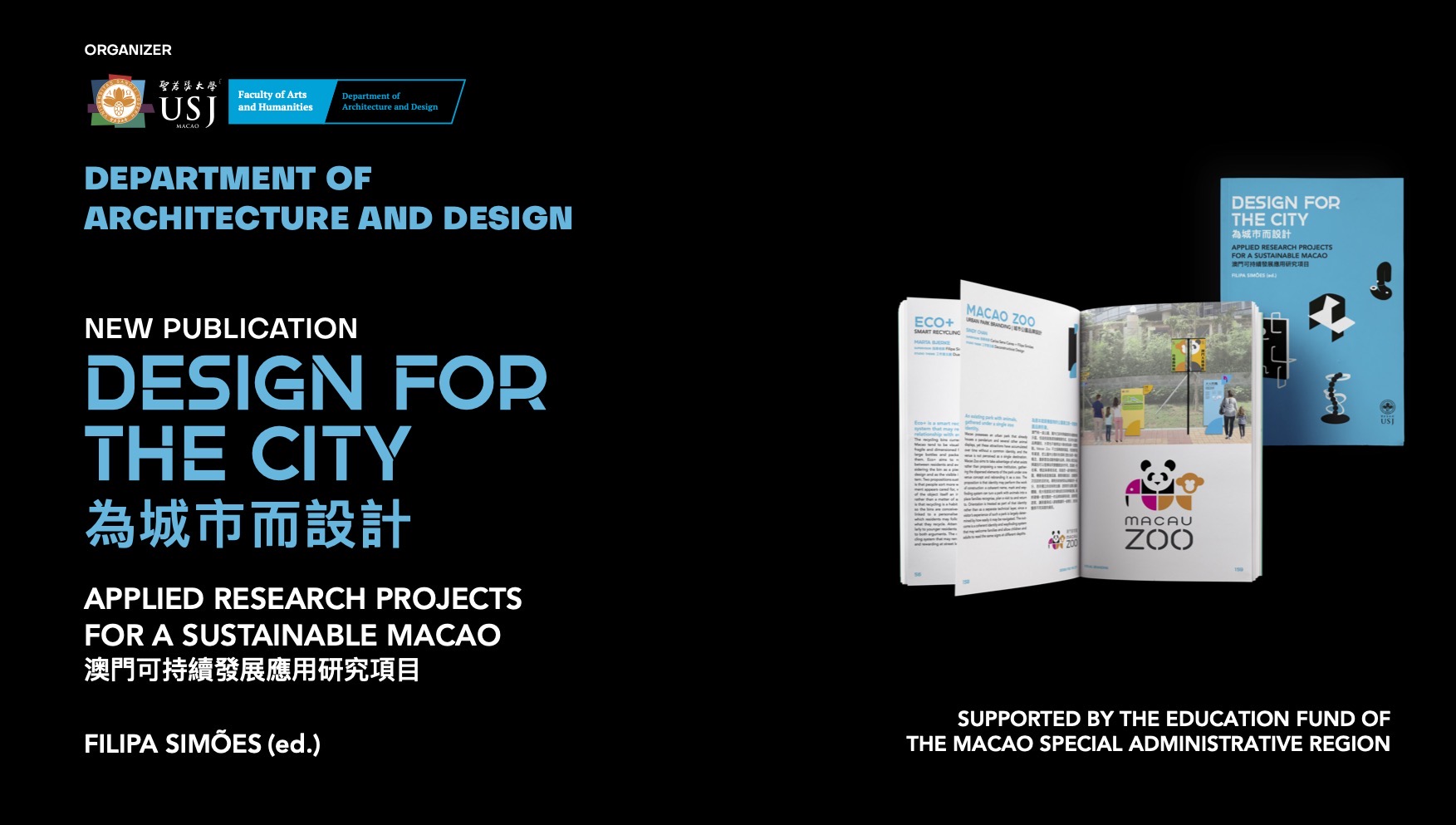
The Department of Architecture and Design of the Faculty of Arts and Humanities has published Design for the City – Applied Research Projects for a Sustainable Macao, a volume presenting a selection of capstone projects developed by final-year students of the Bachelor of Design at the University of Saint Joseph.
Edited by Filipa Simões, Programme Coordinator of the Bachelor of Design, the book draws on the Design Capstone Project, a full-year studio that for more than a decade has asked graduating students to examine their own city, identify a real challenge – a need, a problem or an untapped opportunity – and propose a design solution that may contribute to the quality of life of Macao and its residents. The projects gathered here were selected from the work of more than eighty students supervised between 2013 and 2025.
The projects are not abstract or speculative exercises. Each proceeds from observation, interviews and fieldwork, and is tested against the constraints of a specific context before being carried through to a working prototype, produced in collaboration with industry and with the University’s fabrication and robotic laboratories, and presented at a public graduation exhibition.
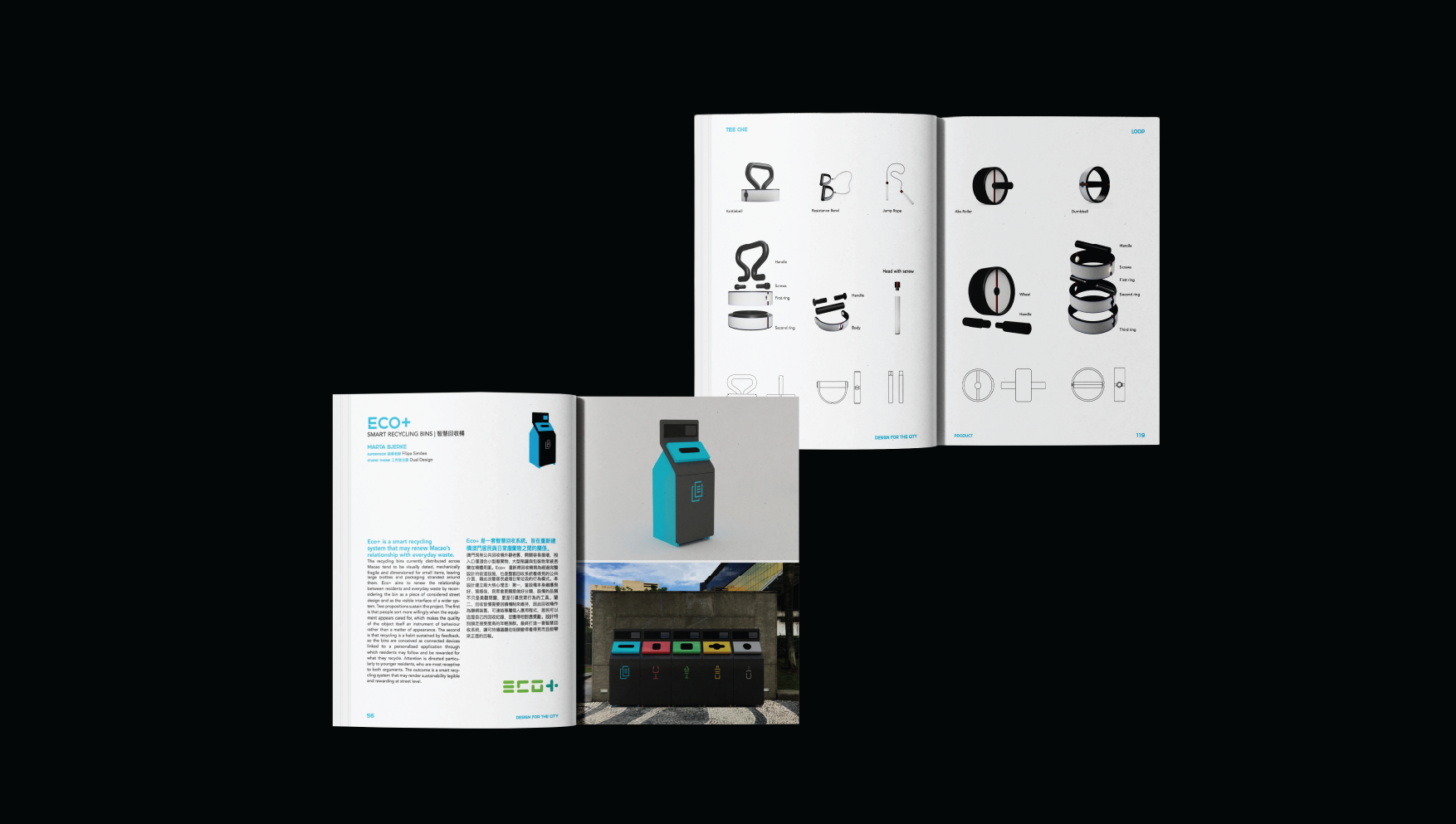
The book is organised in four sections – Urban Equipment, Furniture, Product and Visual Branding – with each project presented through its concept, the design problem identified and the solution adopted in response. An introductory essay sets out the applied, research-led method behind the course and reads Macao as a city of challenges: the scarcity of space in one of the most densely populated territories in the world; an ageing population and the isolation that accompanies it; heritage and cultural identity receding from the perception of younger residents; the legibility of public institutions for a multilingual and intergenerational audience; and the environmental pressures of a subtropical, tourism-driven city. Sustainability underlies the whole, and several projects are framed explicitly against the Sustainable Development Goals.
“The premise has not changed in over a decade: the city is the case study,” said Filipa Simões, the book’s editor. “What the students produce is not a comment on Macao from a distance, but a proposal tested against it. Read together, these projects compose a portrait of a city in transition, drawn through the problems its young designers considered worth addressing.”
The publication was made possible by the support of the Education Fund of the Macao Special Administrative Region.