
USJ Macao Successfully Completes ARC Sustainability Performance Assessment
USJ Macao Successfully Completes ARC Sustainability Performance Assessment
19
May
19/05/2026
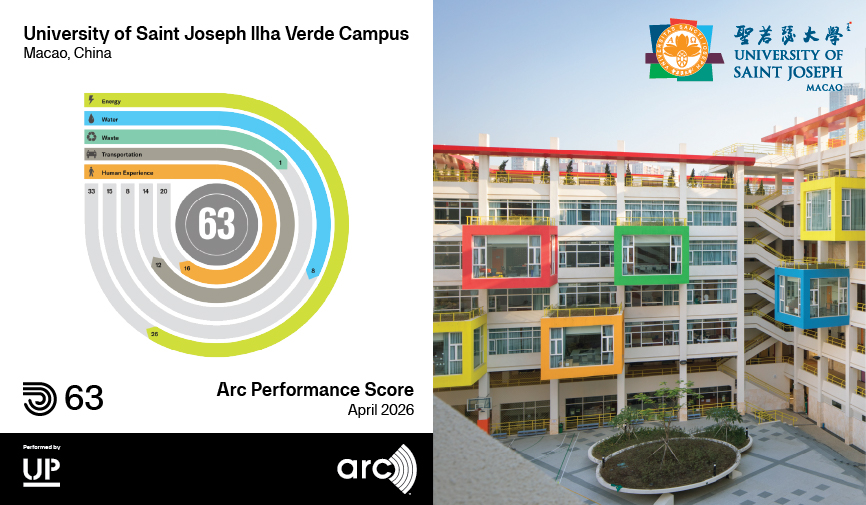
The University of Saint Joseph (USJ) Macao has successfully completed its ARC Sustainability Performance Assessment for the Ilha Verde Campus – an important milestone to its environmental responsibility, occupant wellbeing, and long-term campus performance.
The University of Saint Joseph (USJ) Macao has successfully completed its ARC Sustainability Performance Assessment for the Ilha Verde Campus, marking an important milestone in the university’s ongoing commitment to environmental responsibility, occupant wellbeing, and long-term campus performance.
The assessment forms part of the ARC platform* developed by the U.S. Green Building Council, an internationally recognised framework designed to measure the operational performance and sustainability of buildings and institutions through real-world data and occupant experience.
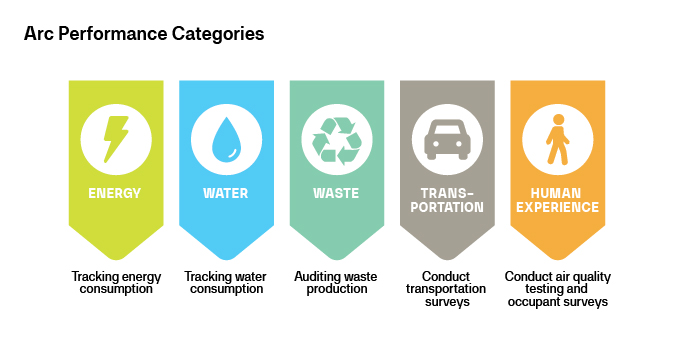
Unlike conventional sustainability assessments focused solely on design intent, ARC evaluates how spaces perform in operation. The platform analyses measurable indicators across key categories including Energy, Water, Waste, Transportation and Human Experience, creating a comprehensive picture of environmental performance and user wellbeing.
The ARC process undertaken by USJ was developed through several stages over recent months. The first phase focused on data collection and baseline establishment, where operational information, utility consumption, transportation patterns, and indoor environmental conditions were gathered and organised. This was followed by performance analysis and benchmarking against local and global datasets available within the ARC platform, enabling the university to understand how its campus compares internationally.
A further stage involved occupant engagement and environmental monitoring. Surveys and indoor air quality assessments were carried out to better understand how users experience the campus environment, evaluating aspects such as thermal comfort, satisfaction, air quality, and overall wellbeing. These findings were then integrated into the final performance assessment to ensure that sustainability was considered not only from an environmental perspective, but also through the quality of the human experience within the campus.
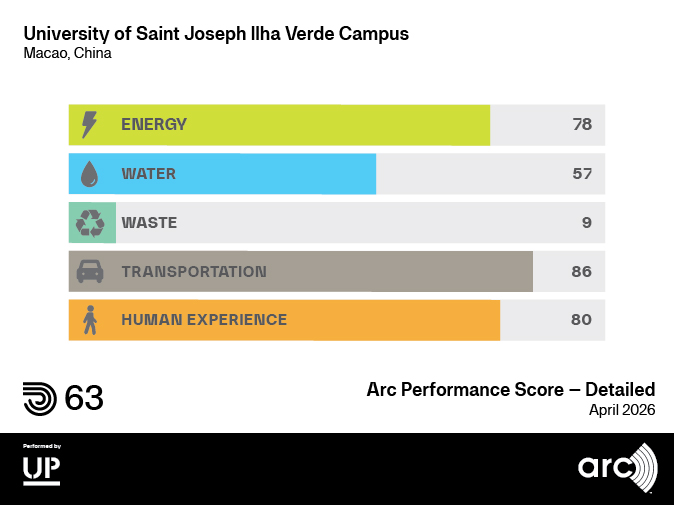
The final ARC Performance Report identified several strong outcomes for the Ilha Verde Campus. The campus energy performance achieved a score of 78 out of 100, an assessment that confirmed that the campus operates without direct on-site fossil fuel combustion, contributing to lower operational carbon emissions and supporting broader sustainability goals.
USJ’s water performance achieved a score of 57 out of 100, reflecting a strong foundation in water management practices while identifying opportunities to further enhance water efficiency and support long-term resource conservation across the campus.
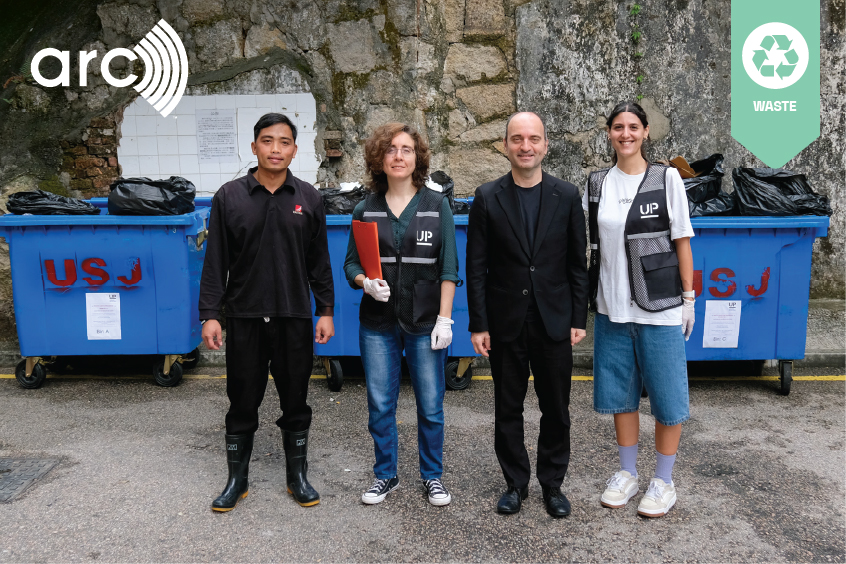
A waste audit was conducted, recording a diversion rate of 2.75K kg and identifying areas for continued improvement and future operational enhancement.

USJ also demonstrated strong transportation performance, achieving a score of 86 out of 100, results that reflect sustainable commuting patterns and comparatively low greenhouse gas emissions associated with campus mobility.
Finally, the human experience performance at the university achieved a score of 80 out of 100, significantly above the global average of 61, reflecting positive occupant satisfaction and healthy indoor environmental conditions, including balanced CO₂ and TVOC levels.
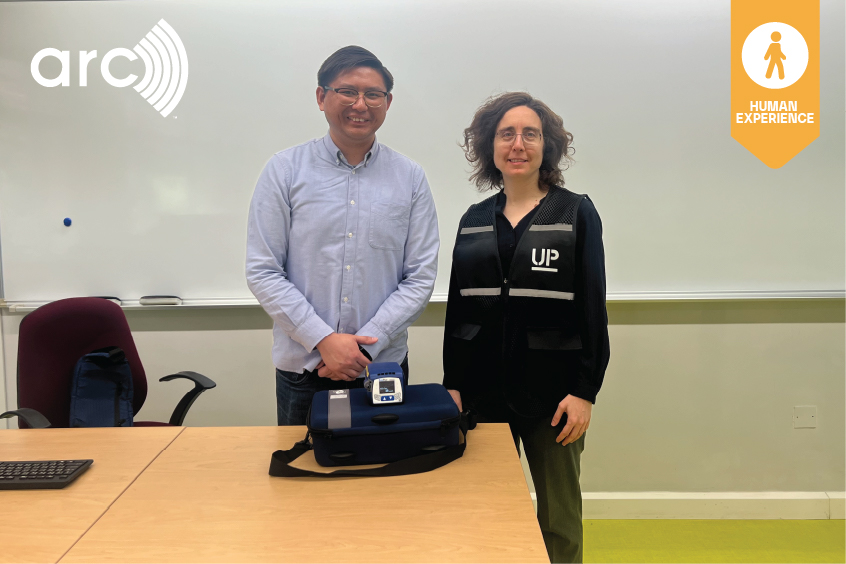
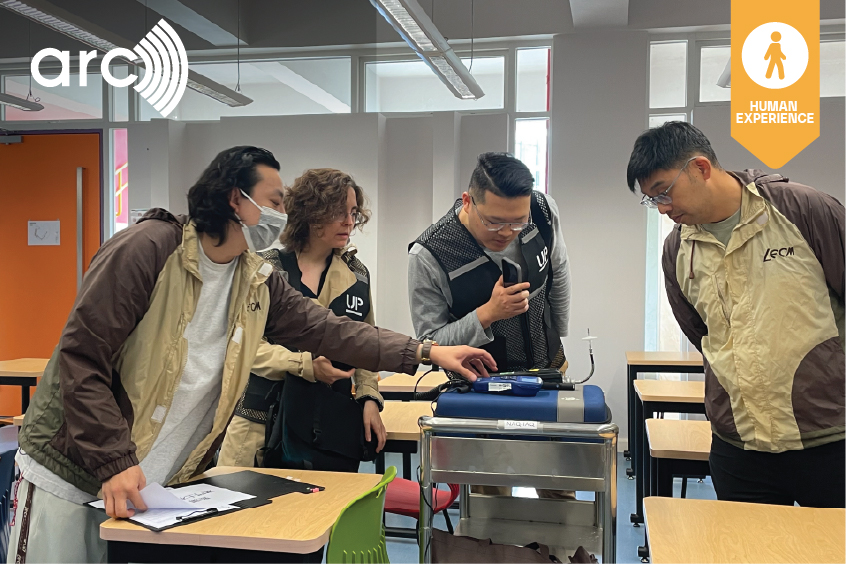
The Indoor Air Quality Testing was performed by UP – Urban Practice with the collaboration of LECM and ISE.
Beyond the performance scores themselves, the completion of the ARC assessment establishes an important foundation for the university’s future sustainability strategy. The process has enabled USJ to create measurable benchmarks, identify opportunities for continuous improvement, and strengthen its understanding of how campus operations influence environmental performance and occupant wellbeing over time.

Conducted by UP – Urban Practice, the ARC assessment positions USJ as a LEED-ready institution, equipped with the operational insights and sustainability framework necessary to support future international certification pathways and performance-driven environmental initiatives.
The University of Saint Joseph is committed to the continuous monitoring and evaluation of its environmental performance, recognising sustainability as an ongoing process of accountability, improvement, and long-term institutional resilience.
*ARC Skoru is a digital performance platform developed by Green Business Certification Inc. (GBCI), in collaboration with the U.S. Green Building Council (USGBC), the organization behind the LEED rating system. The platform assesses the operational performance of buildings and campuses using real data across five key areas: energy, water, waste, transportation, and human experience.