MOSD at USJ Co-organises Parent-Child Communication Skills Workshop
MOSD at USJ Co-organises Parent-Child Communication Skills Workshop
01
Apr
01/04/2026
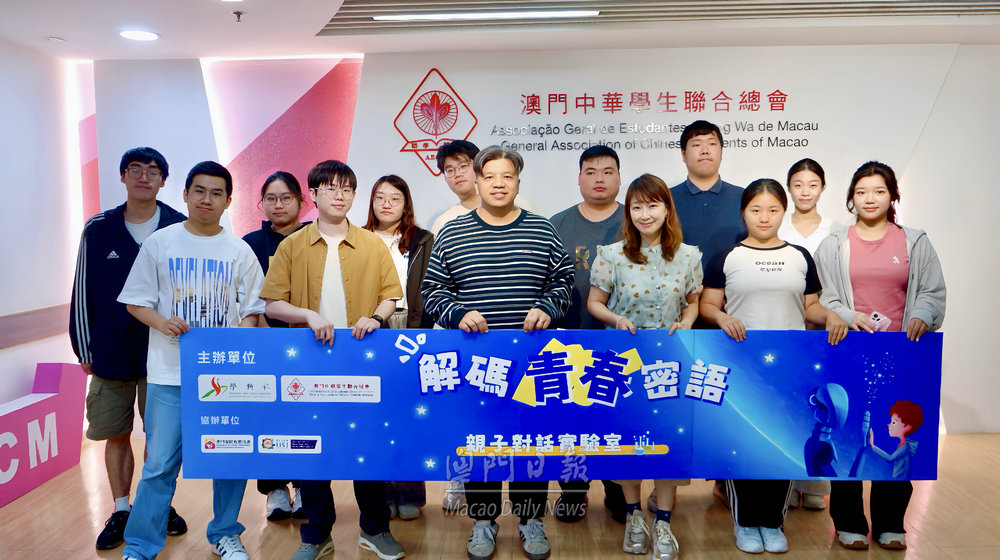
Assistant Professor Jayson Lou from the Faculty of Health Sciences at USJ was invited to facilitate the workshop.
Organised by the Education Advancement Association and the General Association of Chinese Students of Macau, and co-organised by the Macau Family Education Association and the Macau Observatory for Social Development at the University of Saint Joseph (USJ), the “Parent-Child Interaction Study Tour for Youth” held the “Parent-Child Communication Skills Workshop” on 28 March at the association’s venue. Ieong Ying Hung, the study tour’s organiser, expressed hope that the series of activities would encourage young people to practice empathy, strengthen their proactive communication skills, foster mutual understanding, and build healthier, more harmonious relationships with their parents.
Assistant Professor Jayson Lou from the Faculty of Health Sciences at USJ was invited to facilitate the workshop. With over a decade of frontline social work experience, Lou has long been engaged in both research and practice in youth development and social work, placing equal emphasis on theory and hands-on application. Through a range of interactive exercises – including storytelling, case study reenactments, and empty-chair techniques – the workshop helped participants develop practical communication skills.
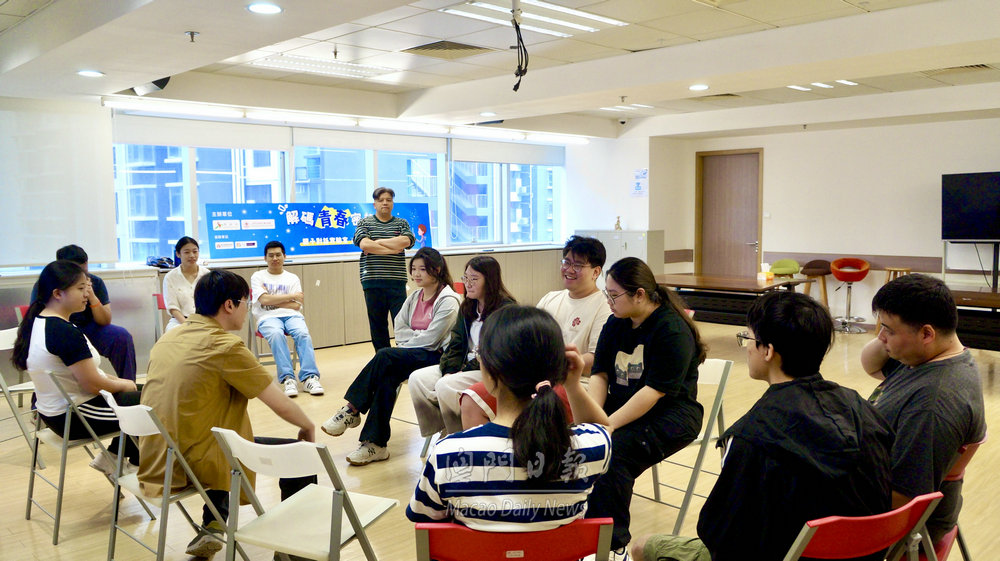
The session featured two family scenario simulations in which participants reenacted common parent-child conflicts. Prof. Jayson Lou provided real-time feedback and analysis, highlighting key communication strategies that lead to more effective interactions, allowing participants to deepen their understanding through direct practice.
A central focus of the workshop was the theory of the “Five Inner States”, which includes the nurturing parent, critical parent, compliant child, creative child, and adult roles. This framework helped participants recognise their own communication patterns. Through exercises such as reenacting scenarios to practice “words of love” and using the empty-chair technique to explore “words for the self”, participants were guided to reflect on their emotions and expressions during interactions with their parents, identify mutual communication blind spots, and learn to express their needs in a more mature and rational way.