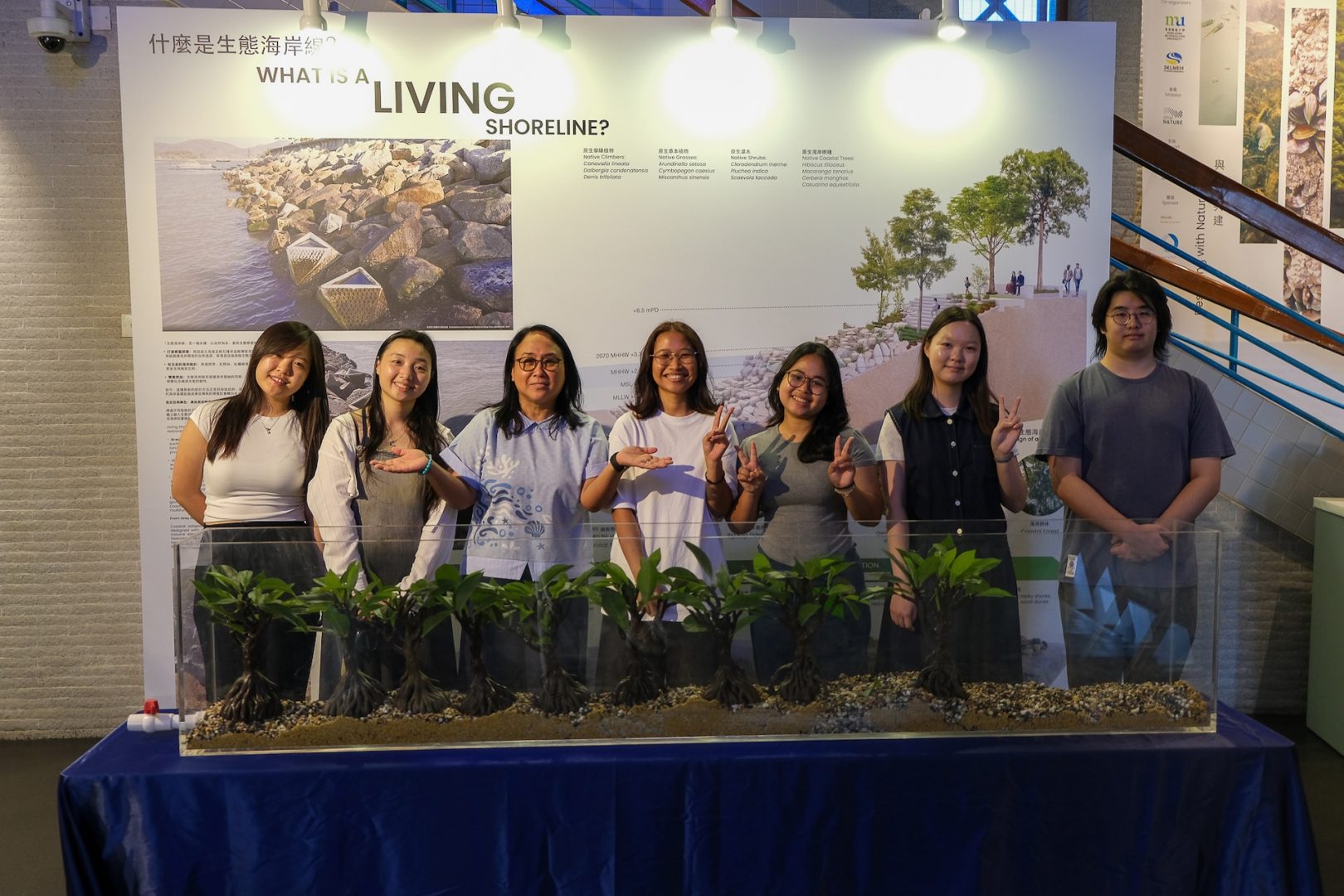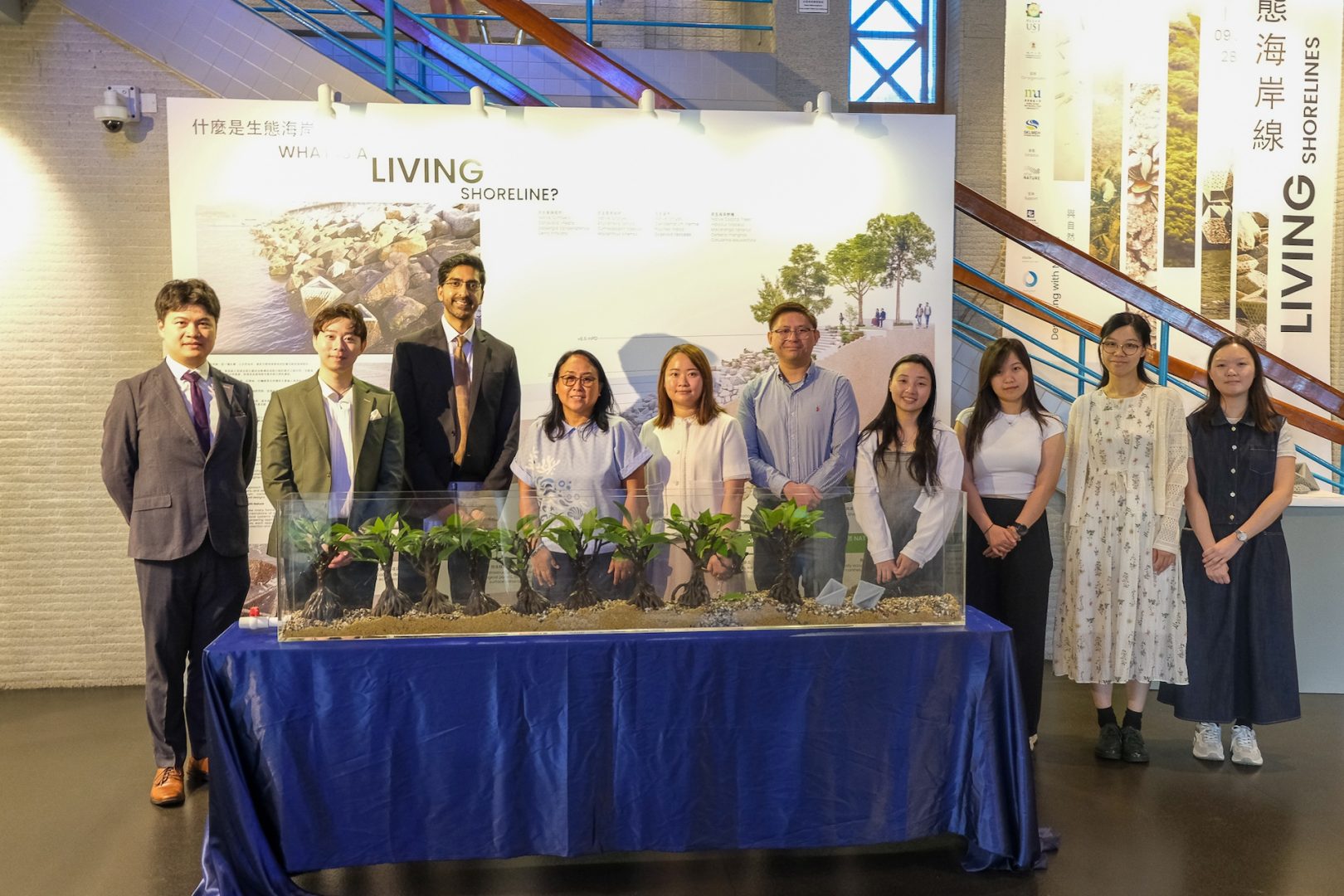
“Living Shoreline ── Designing with Nature” Exhibition Opens at Macao Maritime Museum
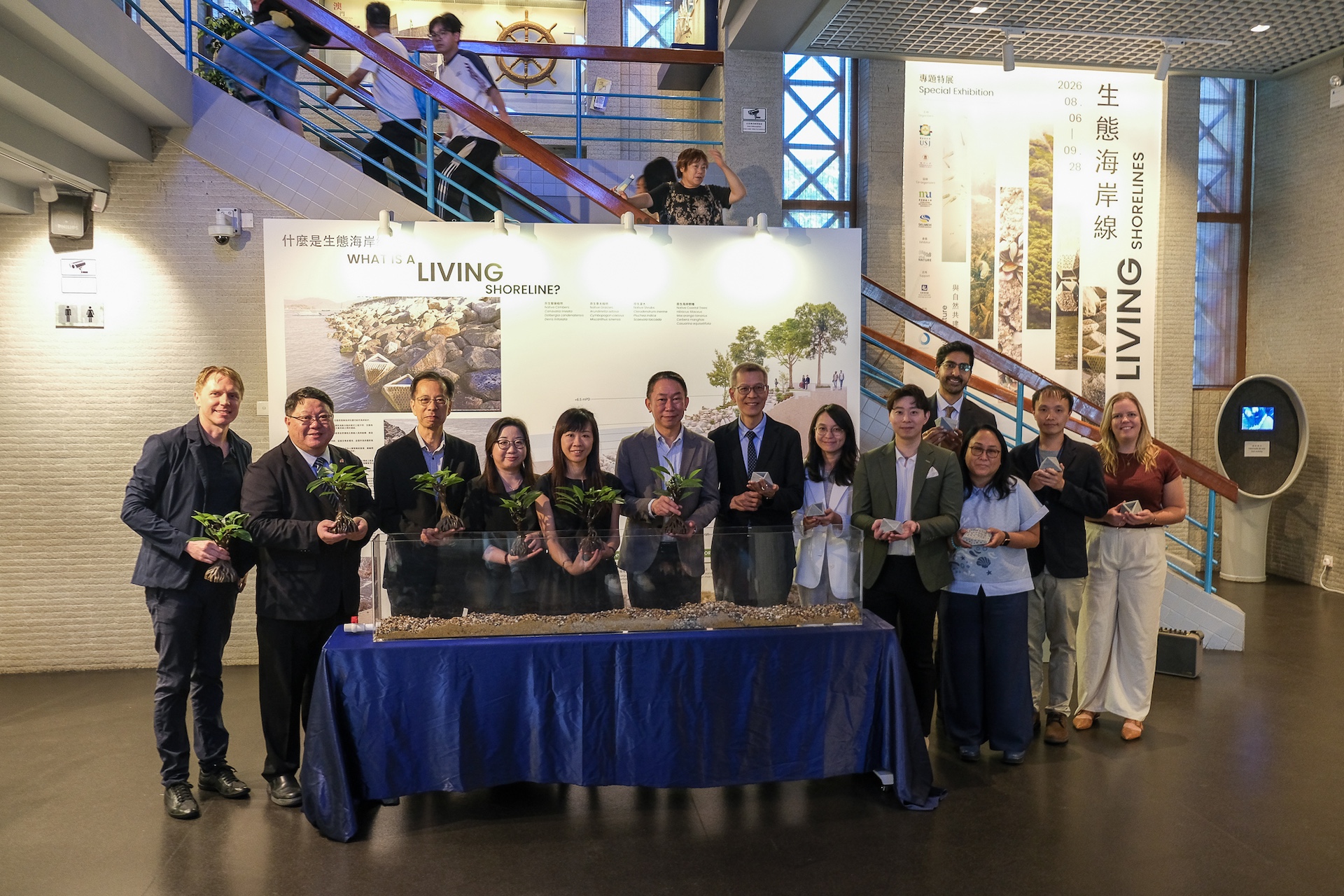
“Living Shoreline ── Designing with Nature” Exhibition Opens at Macao Maritime Museum
07
Aug
07/08/2026
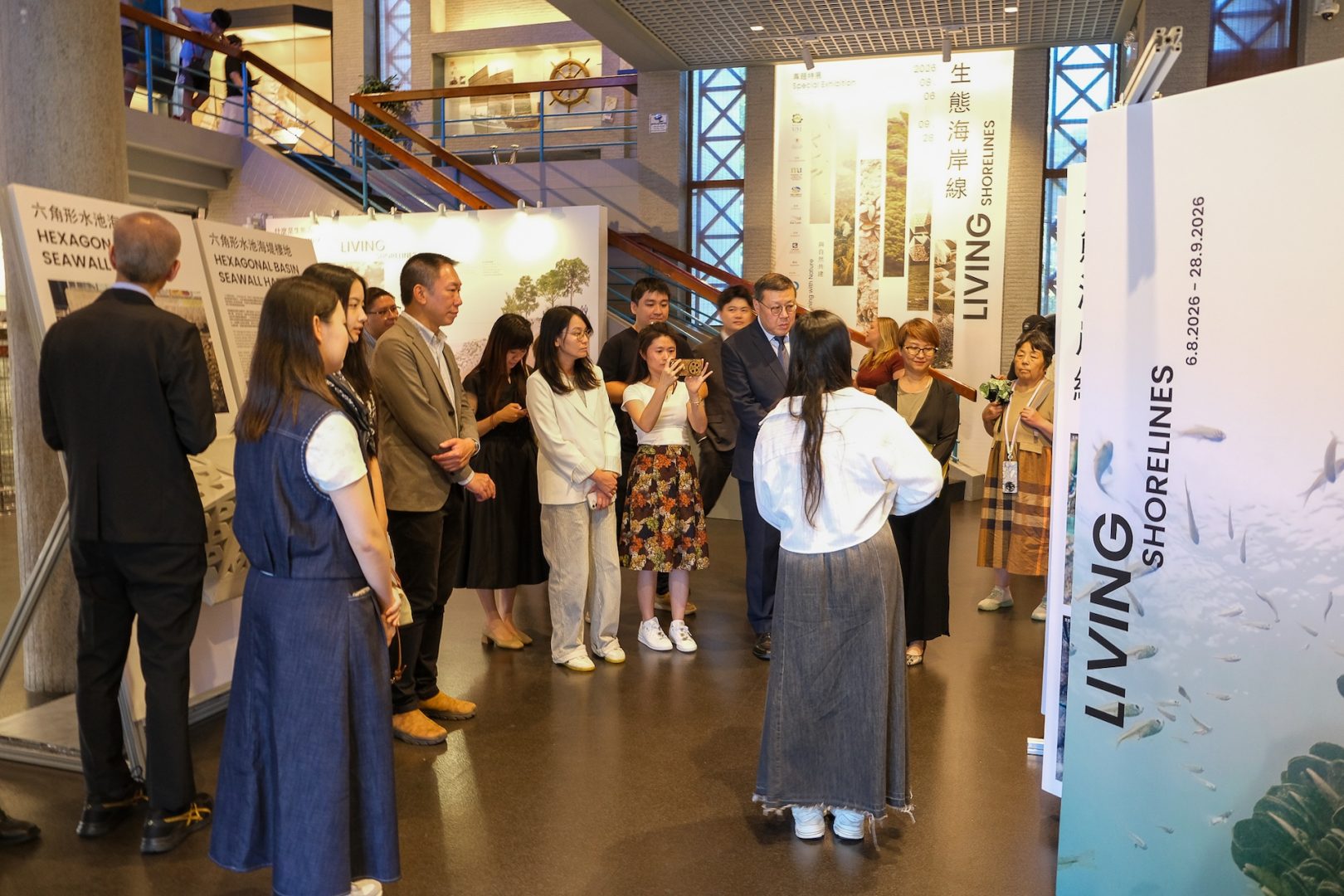
The exhibition, running until 28 September 2026, invites the public to reconsider what coastal protection can look like when engineering and ecology are placed in dialogue.
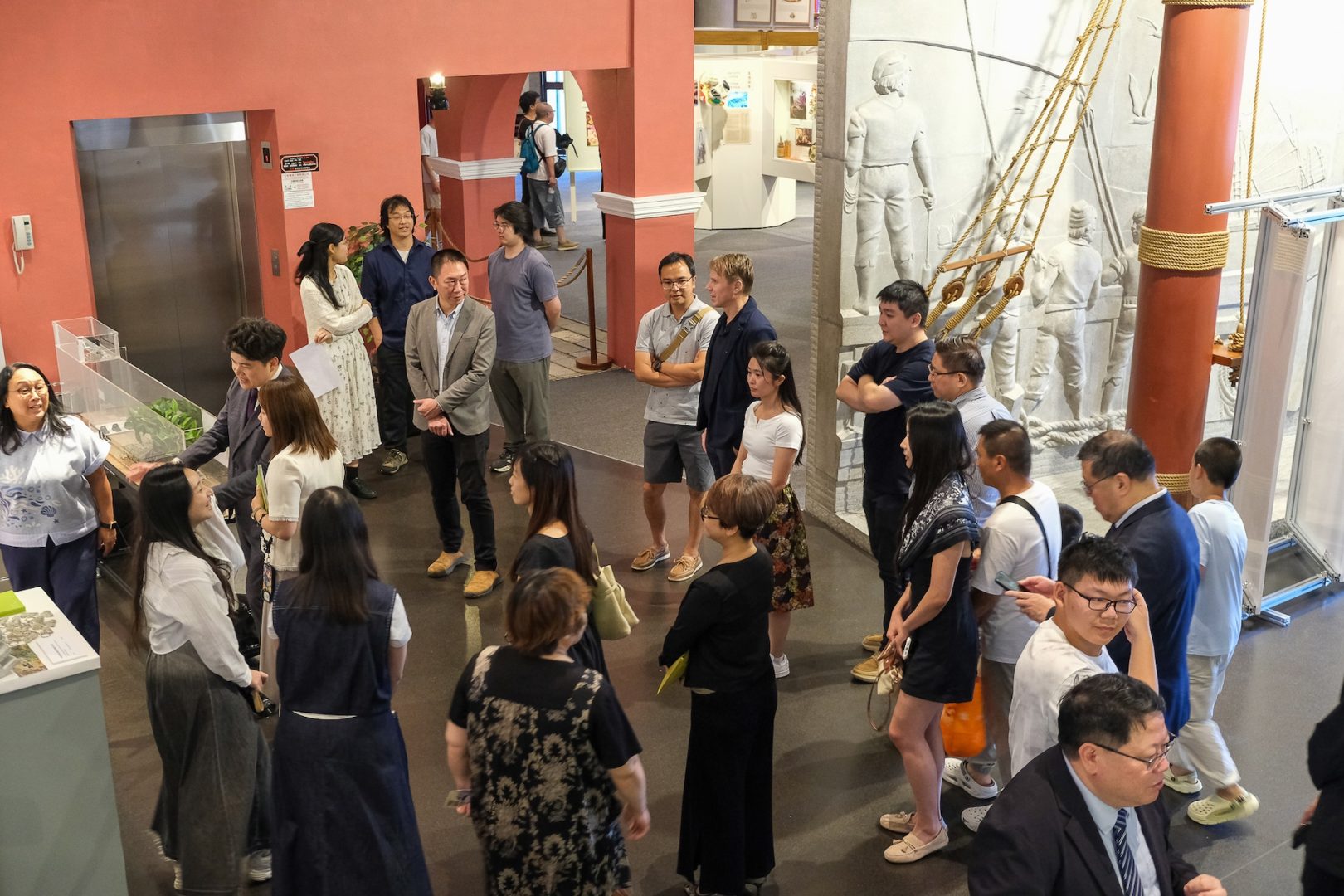
In an era when rising sea levels and intensifying storms are redefining the relationship between cities and their coastlines, the University of Saint Joseph (USJ) is proud to organise the exhibition “Living Shoreline ── Designing with Nature”, which officially opened on 6 August 2026 at the Macao Maritime Museum.
For decades, conventional coastal infrastructure such as seawalls, breakwaters, and revetments has prioritised structural defence against waves and erosion. Yet these hard-edged solutions often come at a cost: lost habitats, diminished biodiversity, and a progressive disconnection between human communities and the marine environments that sustain them. The Living Shoreline exhibition challenges this paradigm by presenting an alternative vision – one in which shorelines are not merely barriers but living, breathing ecosystems that protect, nourish, and adapt.
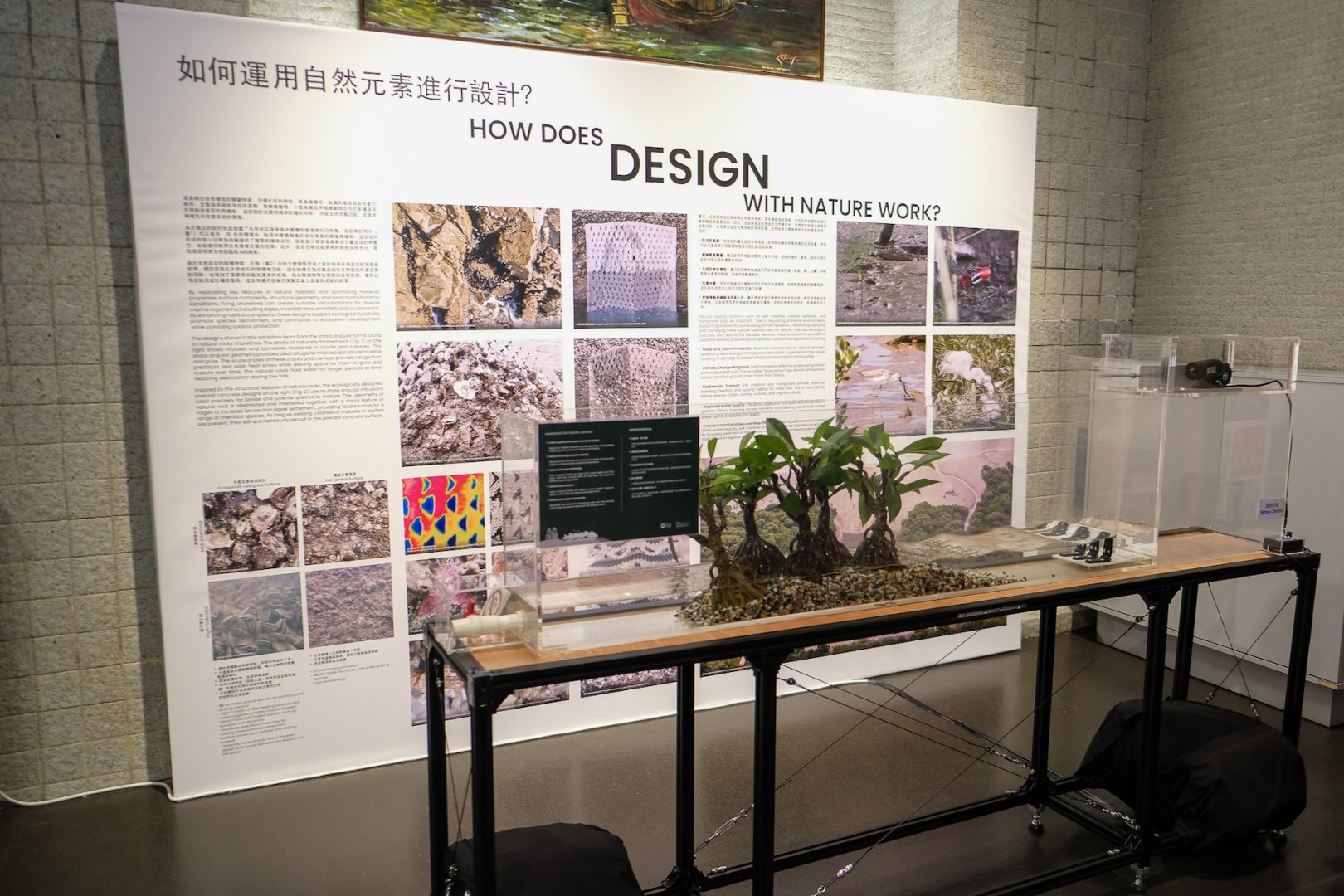
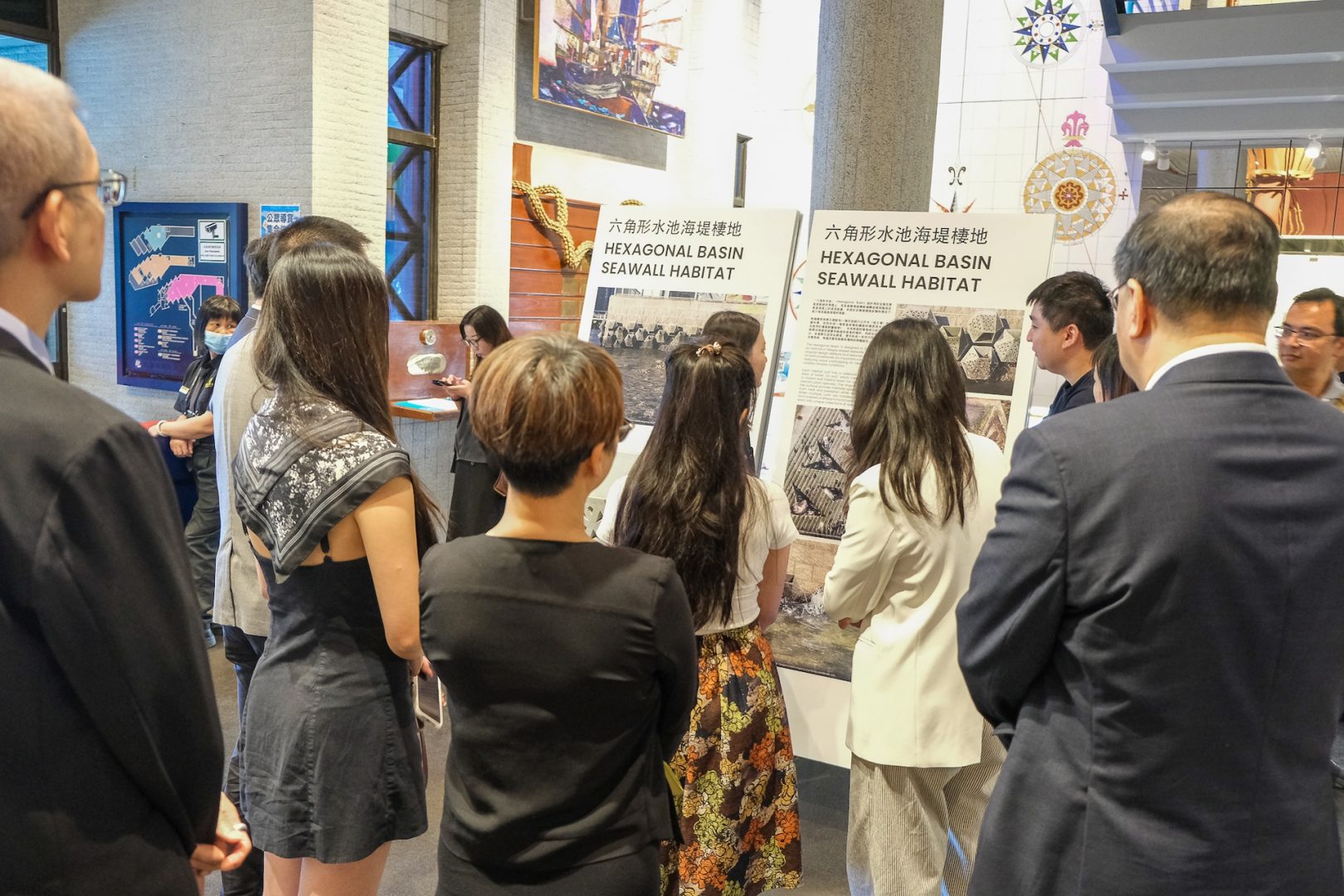
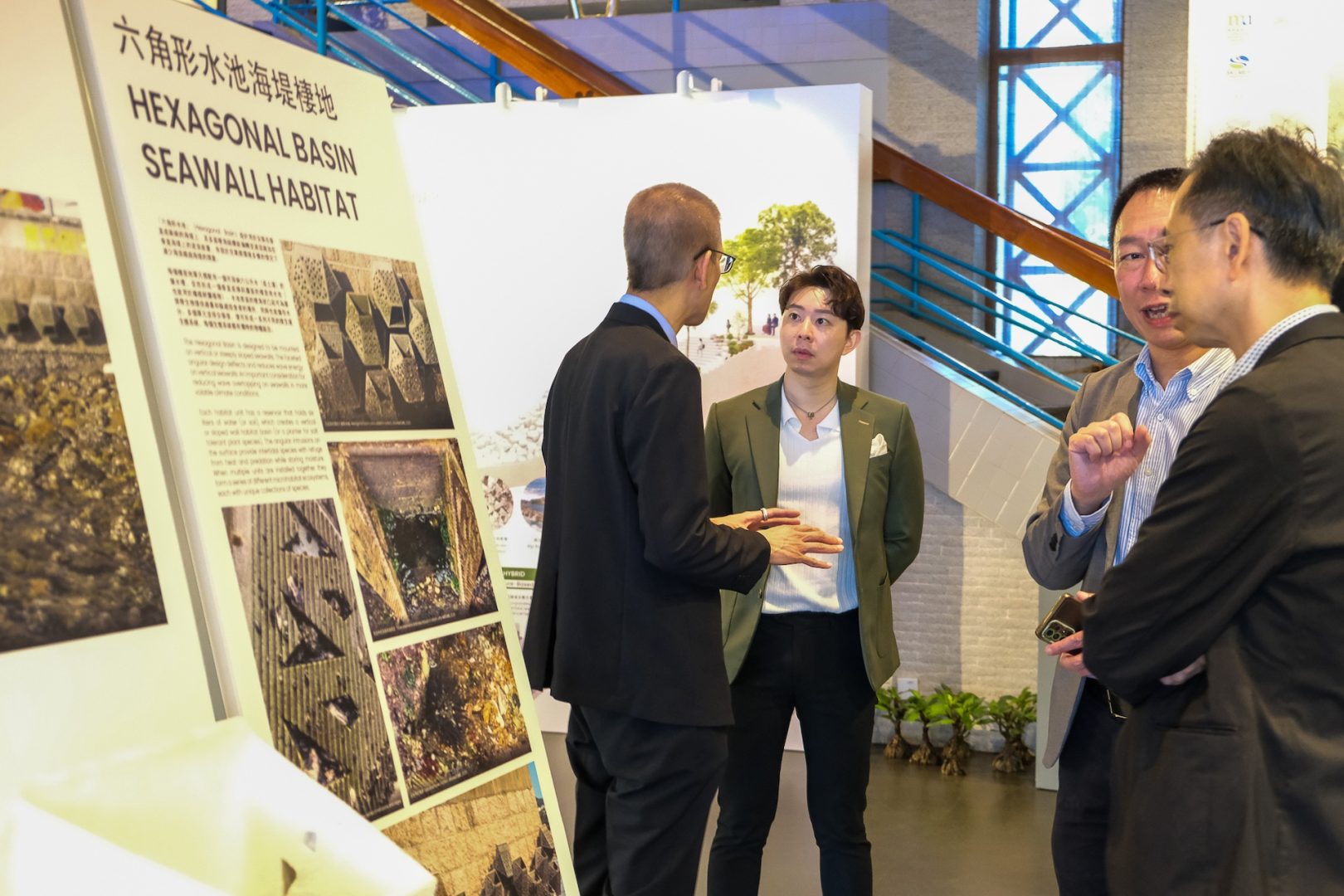
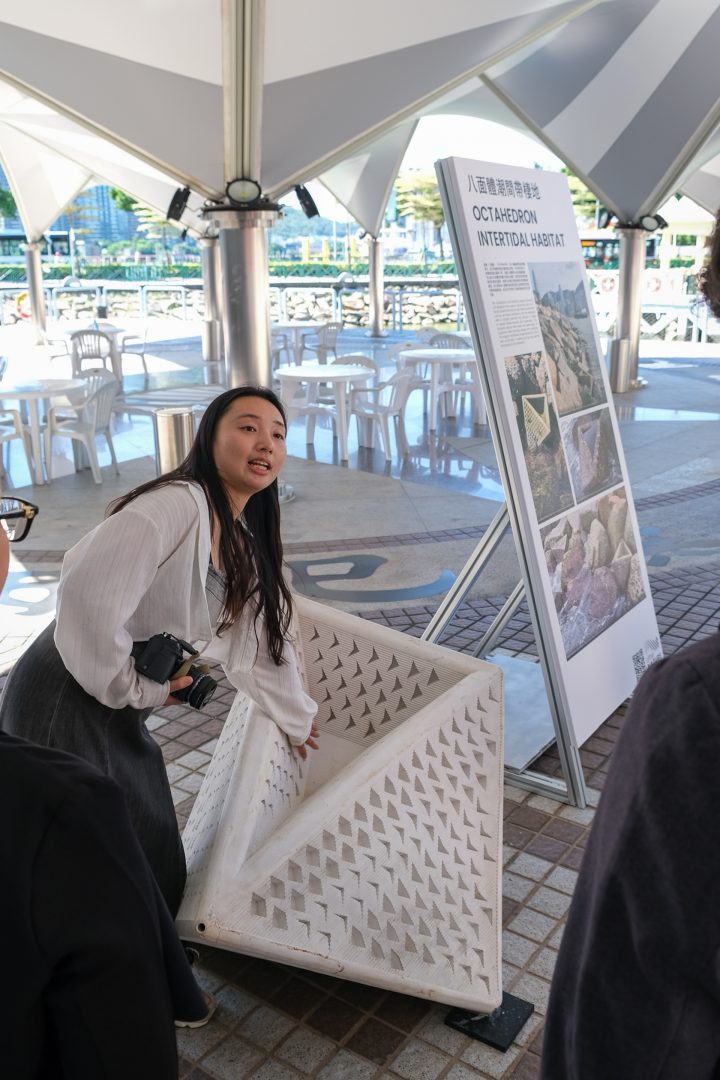
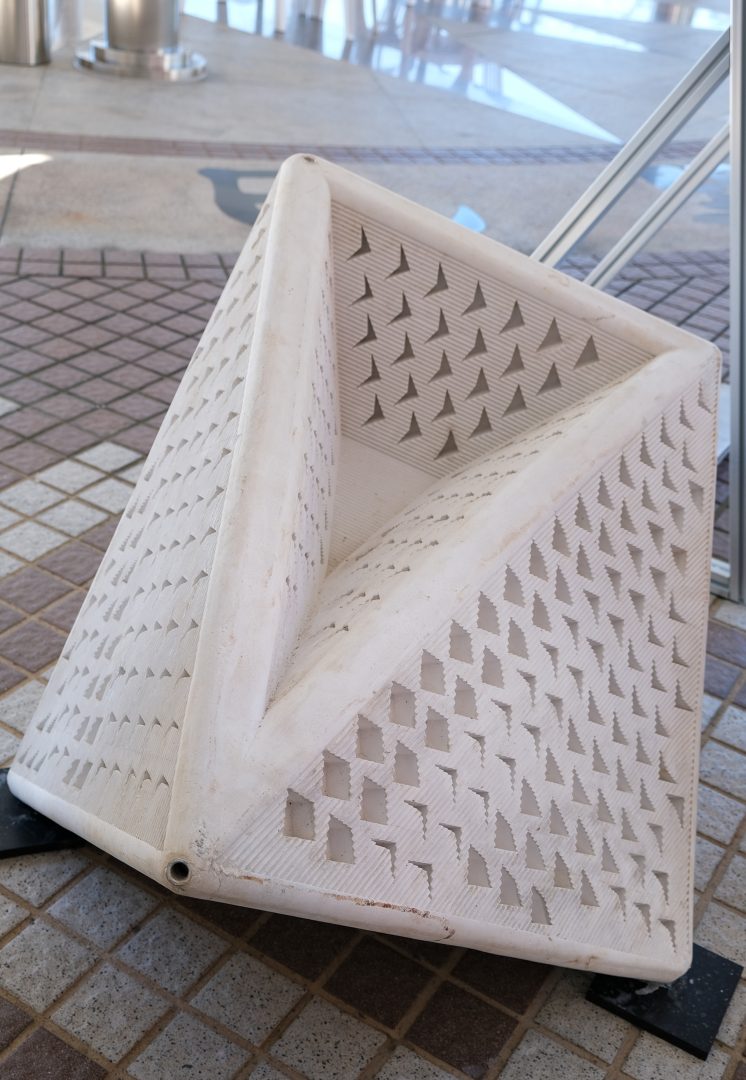
At the heart of the exhibition is a simple but profound proposition: that working with nature is not a concession to environmental ideals but a practical strategy for long-term coastal resilience. Through interactive displays, research case studies, and design prototypes, visitors are introduced to nature-based solutions that are already taking root in the region. Mangrove buffer zones that absorb wave energy while sequestering carbon. Oyster reefs that filter water and stabilise sediment. Ecologically enhanced seawalls fitted with habitat tiles and crevices that turn vertical concrete into vertical ecosystems. These are real tested projects and increasingly relevant to Macao’s own coastal context.
The exhibition is the result of a collaborative effort between USJ’s Department of Science and Environment, the University of Macau, the Hong Kong Metropolitan University, and AfterNature, with sponsorship from the Drop by Drop Project and generous support from the Marine and Water Bureau, (DSAMA). It reflects a growing consensus among scientists, designers, and policymakers that coastal development and ecological conservation must be pursued as complementary goals.
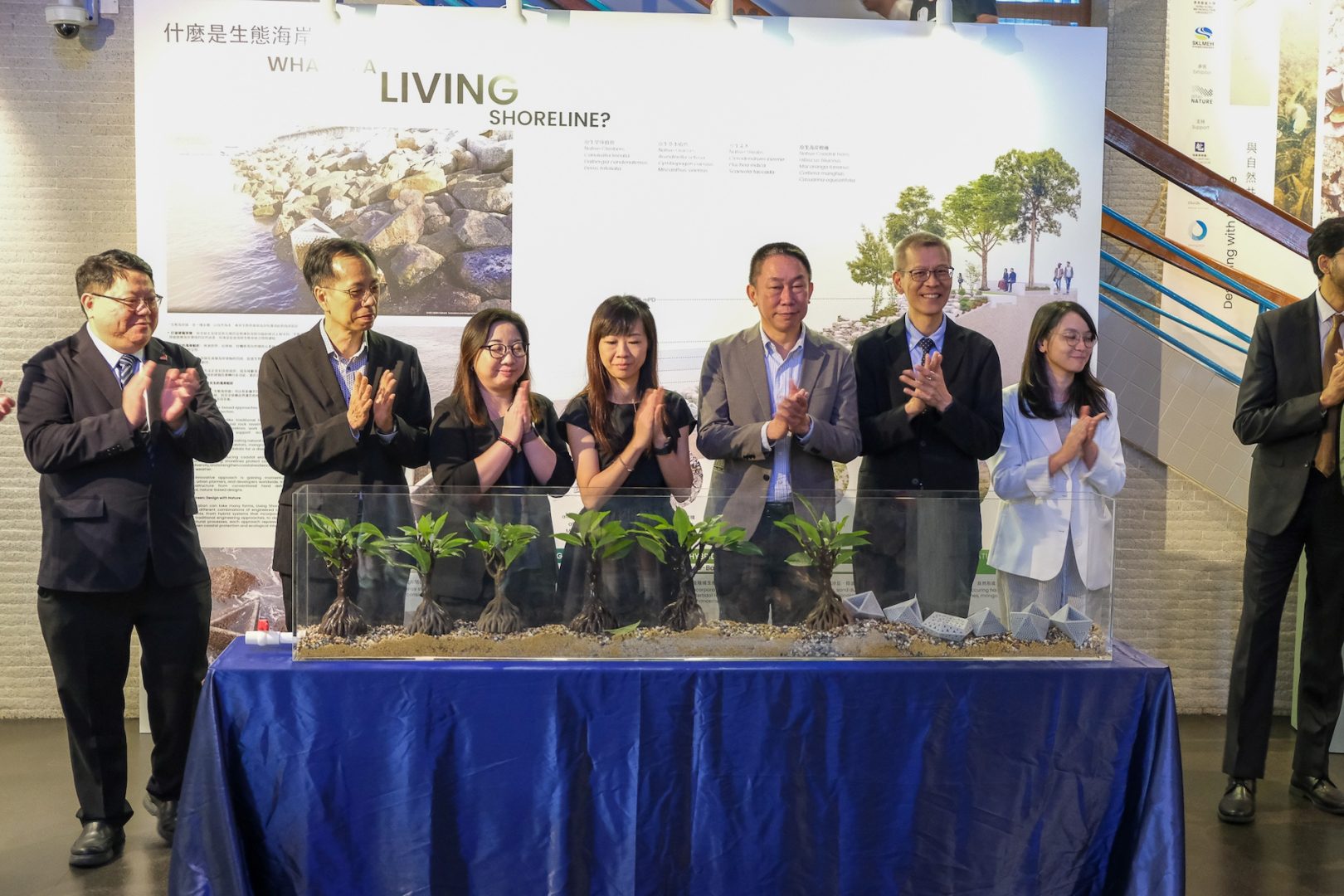
The exhibition’s opening ceremony was officiated by representative of the Education and Youth Development Bureau (DSEDJ), Ms. Wong Yuk Ying, Supervisor of the Division of Quality Assurance; Mr. Sit Kai Sin Roy, Director of the Marine and Water Bureau (DSAMA); Ms. Chan Cheng Sun (DSOP) Acting Head of Architectural Design Division of the Public Works Bureau (DSOP); Mr. Cheong Hong Fat, Deputy Curator of the Macao Science Center; Mr. Pranav Jampani, Vice President of Sustainability and ESG, Sands China Limited; Ms. Sio Man Lam, Directo of District Development Centre at União Geral das Associações dos Moradores de Macau; Prof. Thomas Lok, Environmental Consultative Committee member of the University of Macao; Prof. Jacky Ho, Dean, Faculty of Health and Environmental Sciences of the University of Saint Joseph; Prof. Kenneth Leung, Director, State Key Laboratory of Marine Environmental Health (SKLMEH) at City University of Hong Kong; Prof. Karen Tagulao, Head of the Department of Science and Environment and Coordinator of the Drop by Drop project in USJ; Prof. Racliffe Lai, Assistant Professor of Department of Civil and Environmental Engineering at University of Macao; and Dr. Thea Bradford and Dr. Michael Kokora from AfterNature Ltd.
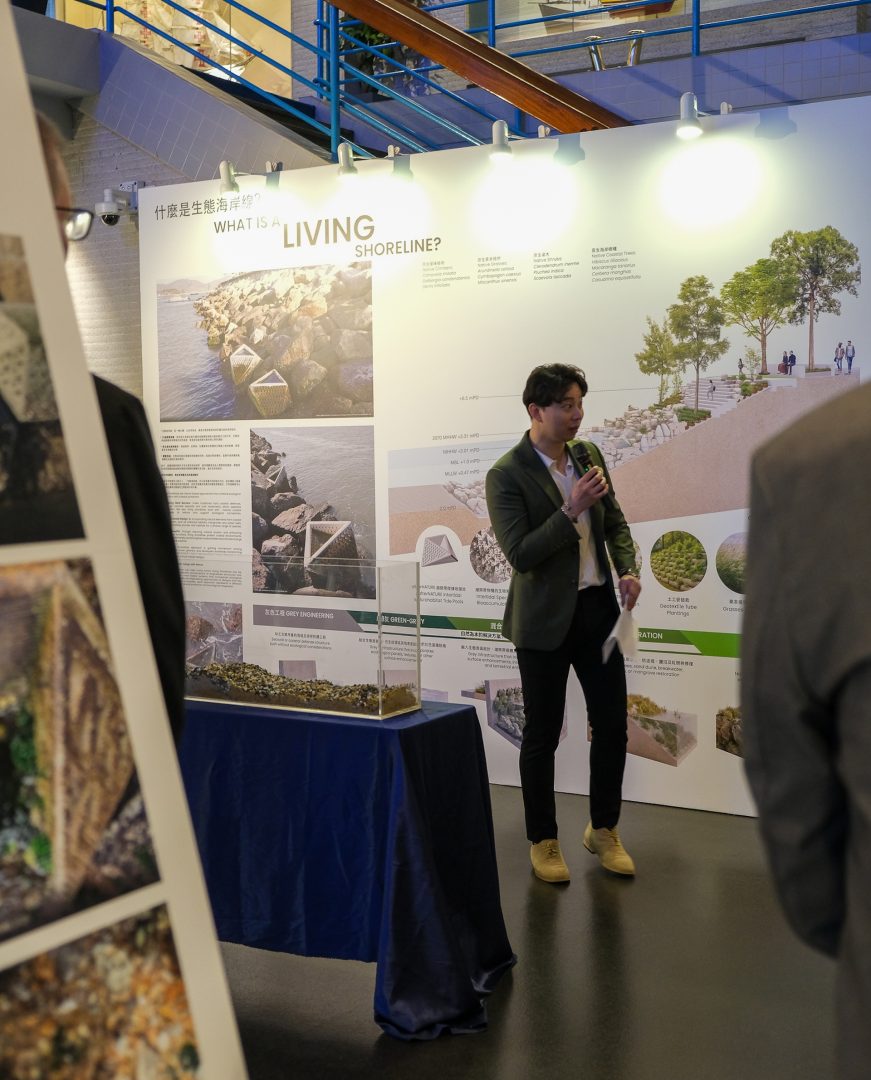
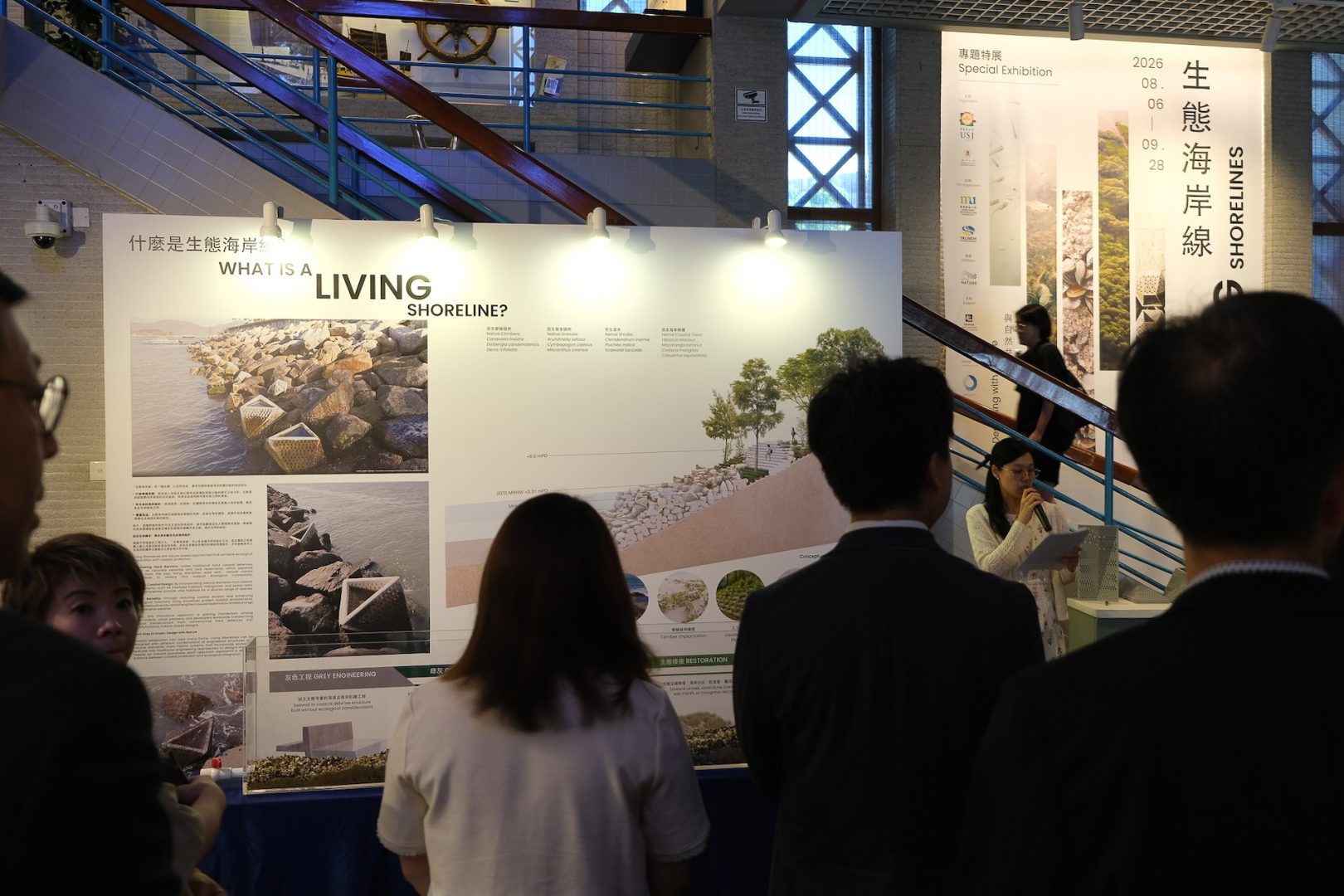
Prof. Jacky Ho, Dean of the Faculty of Health and Environmental Sciences at USJ, delivered the opening remarks, emphasising the important interconnection between humans and nature, and sharing insights from USJ’s ongoing research into water resource management and ecological restoration.
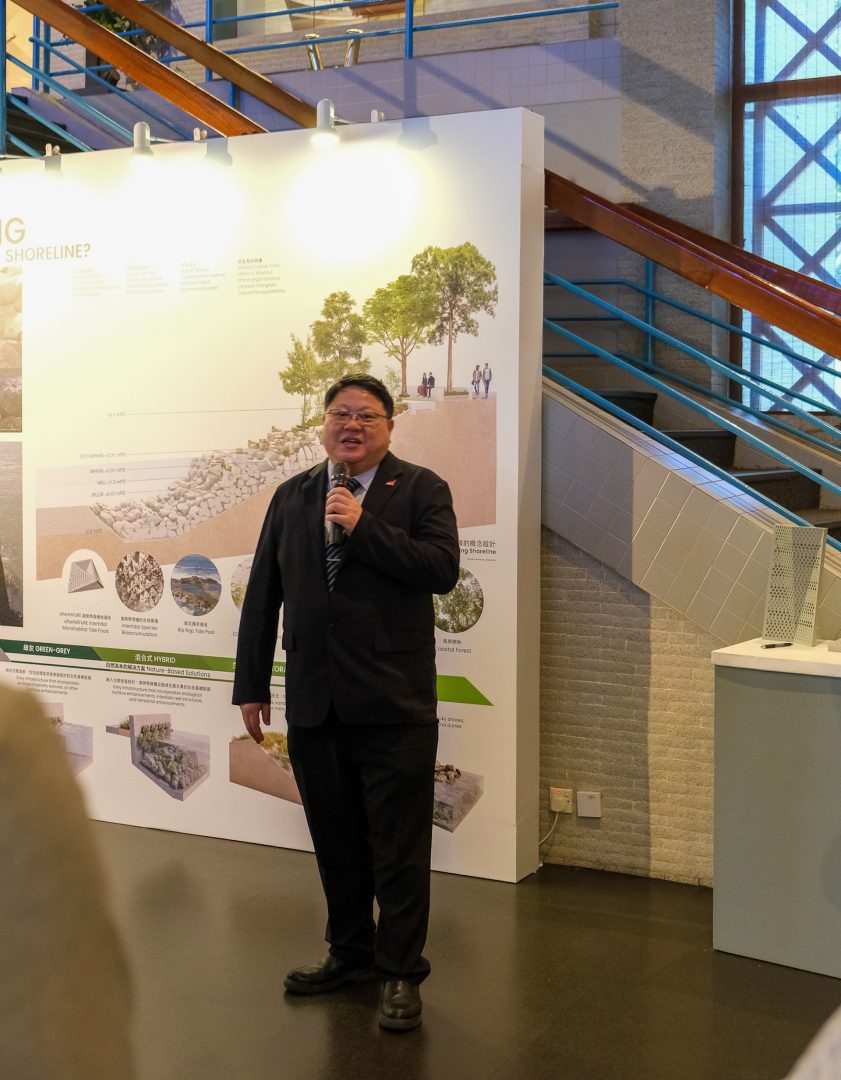
The ceremony also featured a speech by Prof. Kenneth Leung, Director of the State Key Laboratory of Marine Environmental Health at City University of Hong Kong, whose work on marine ecotoxicology and ecological engineering has been instrumental in advancing nature-based coastal solutions in the region.
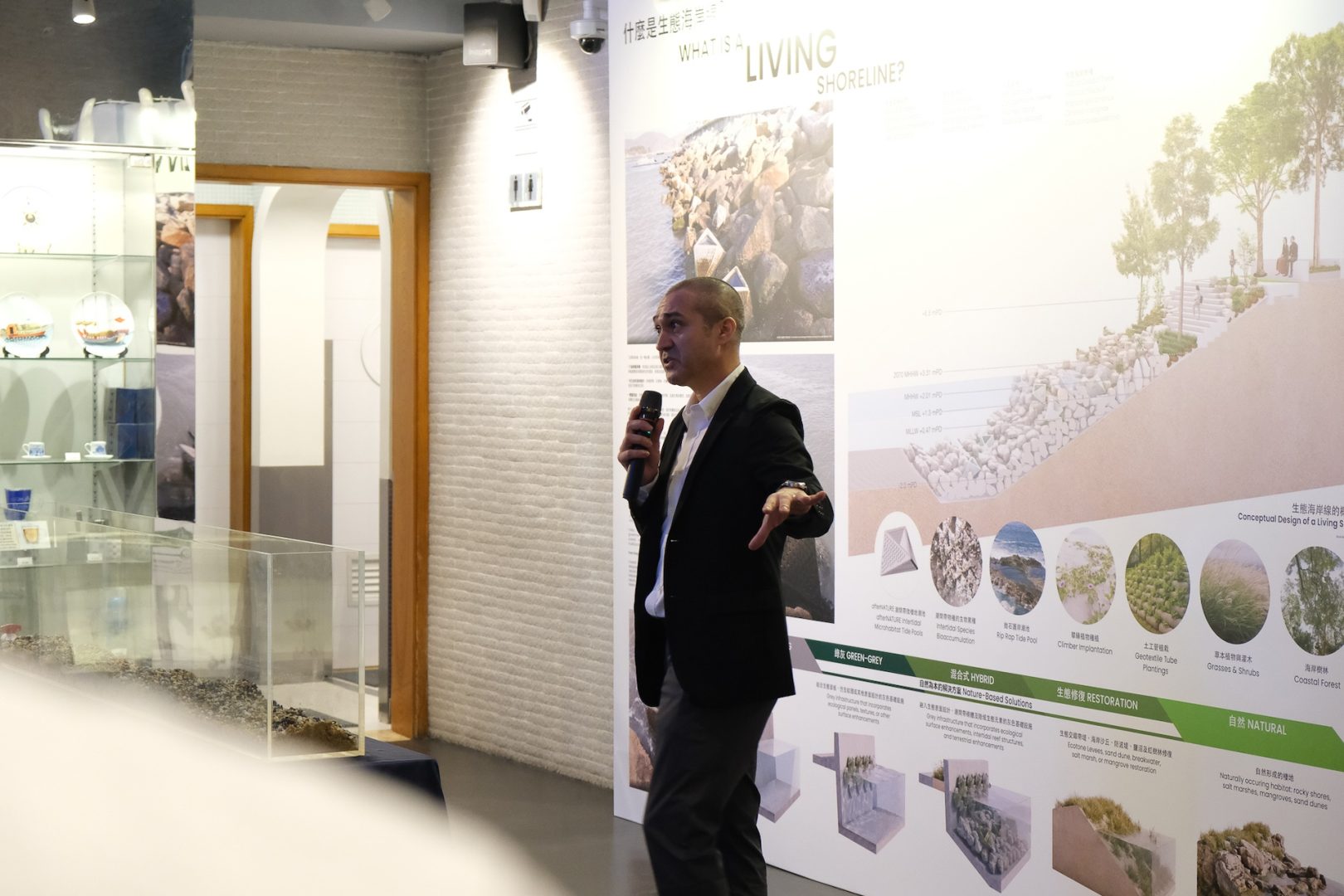
Mr. Juan Carlos Astudillo, Director of AfterNature, also addressed the audience, offering a designer’s perspective on how creative intervention can restore ecological function in urbanised shorelines.
The exhibition is an extension of USJ’s mission to contribute meaningfully to the social and environmental well-being of the community it serves. Macao, with its dense urban fabric and vulnerable coastline, stands to benefit enormously from the principles on display. The exhibition shows a measured, evidence-based case for integrating ecological thinking into coastal planning.
The exhibition is open to the public from Wednesdays to Mondays (closed on Tuesdays), 10:00 am to 6:00 pm, at the Macao Maritime Museum.