Research Report on Support Strategies and Needs of Medical-Social Services for Families Caring for People with Down Syndrome
Research Report on Support Strategies and Needs of Medical-Social Services for Families Caring for People with Down Syndrome
03
Jul
03/07/2026
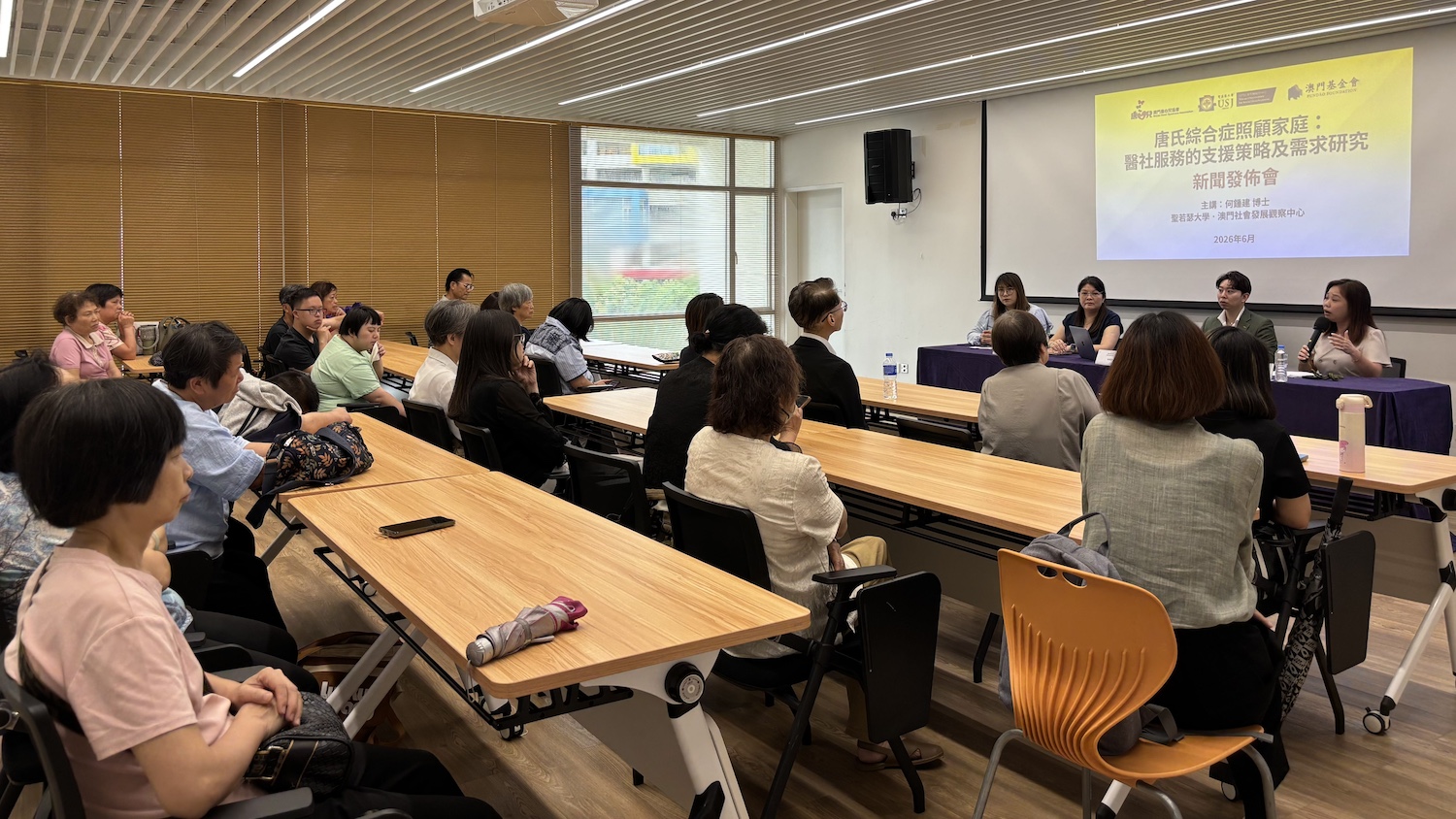
The Macao Observatory for Social Development (MOSD) USJ and the Macau Down Syndrome Association recently jointly released the “Research Report on Support Strategies and Needs of Medical-Social Services for Families Caring for People with Down Syndrome”.
The Macao Observatory for Social Development (MOSD) of the University of Saint Joseph (USJ) and the Macau Down Syndrome Association recently jointly released the “Research Report on Support Strategies and Needs of Medical-Social Services for Families Caring for People with Down Syndrome”. This marks the first study dedicated to investigating the multiple plights faced by families within the association who care for individuals with Down Syndrome. Completed by Associate Professor Ho Chong Kin and his research team, and funded by the Macao Foundation, the report provides an important basis for the formulation and improvement of relevant local policies.
Launched in 2025 and completed in May 2026, the study successfully surveyed 91 eligible family caregivers from the association. The findings reveal a worrying reality:
- Demographics: Surveyed caregivers are predominantly middle-aged and elderly females, with an average age of over 57.
- Responsibilities: Nearly 90% are parents of individuals with Down Syndrome, and over half reported balancing employment with caregiving responsibilities.
- The Dual-Aging Plight: As the life expectancy of individuals with Down Syndrome extends, many families are falling into a “dual-aging dilemma”—where both the caregivers and the individuals they care for are aging simultaneously. The issue of handing over caregiving responsibilities is becoming urgent, requiring immediate solutions for future care.
Furthermore, research has found that people with Down Syndrome generally face a range of health issues simultaneously, with dental and oral problems, visual impairments and congenital heart defects being the most common. Surveys indicate that the more complex a person’s health condition, the greater the pressure placed on their carers.
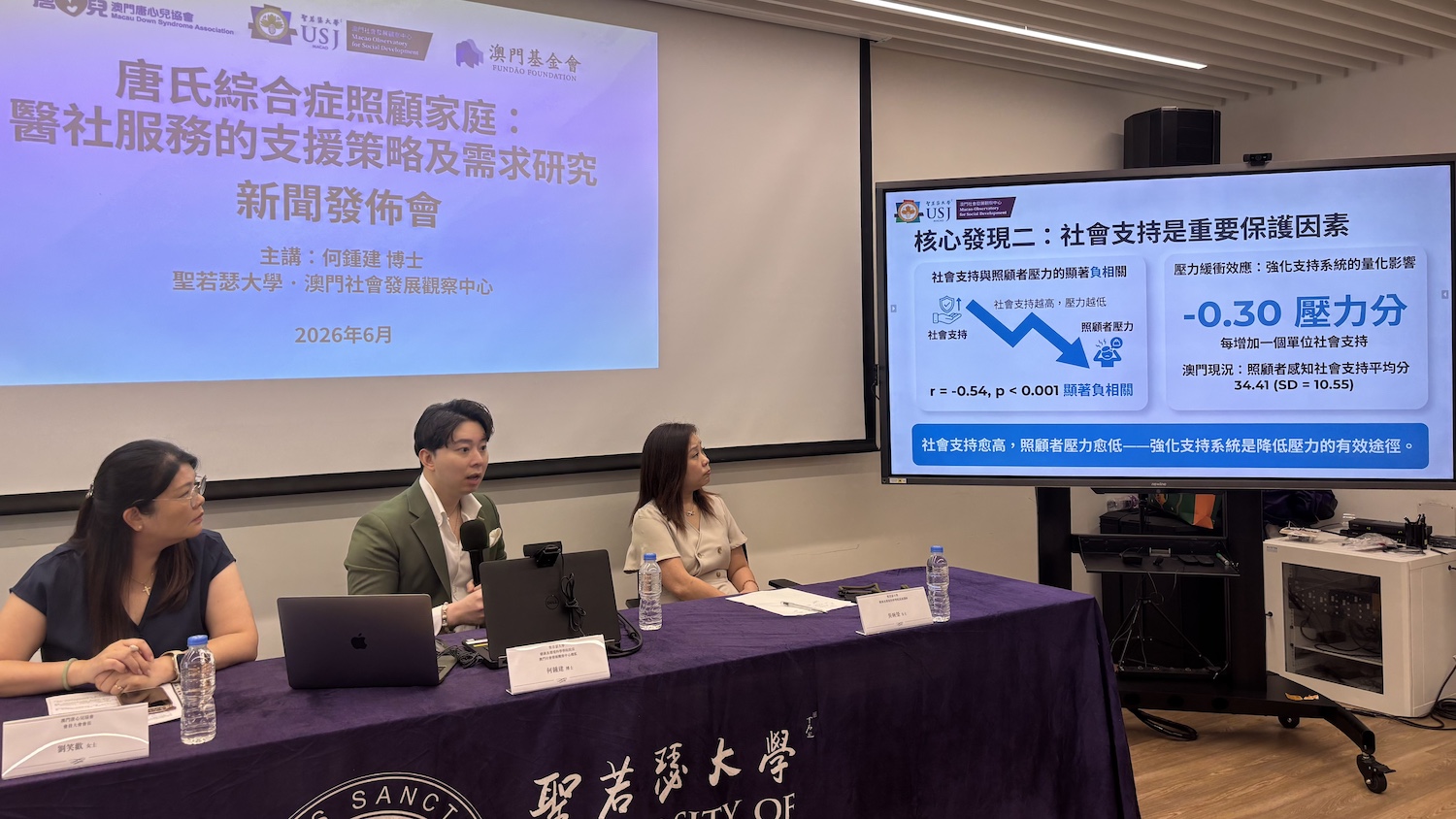
The study also confirmed that perceived social support plays a significant protective role in alleviating caregiving stress, with its positive effects even outweighing the harm caused by complications. However, the study also revealed an unexpected finding: social support failed to effectively moderate the relationship between complications and caregiving stress. The research team pointed out that this result is far-reaching – it illustrates that general social support is ill-equipped to bear the complex burden of medical management. What carers truly need is a more targeted model of ‘medical-social collaboration’, rather than simply relying on networks of friends and relatives to ‘get by’.
In terms of service evaluation, the survey highlights clear gaps in existing community provisions:
- Psychological Support: Only 23.9% of caregivers gave a positive rating to “psychological support for caregivers”, making it the lowest-scored dimension across all evaluations.
- Mobility & Inclusion: Regarding mobility and social participation, over 50% of respondents reported that individuals with Down Syndrome face transportation difficulties, while nearly 40% pointed out that discrimination remains an issue.
- Long-term Planning: Notably, an overwhelming 96.6% of respondents believe it is necessary for society to develop residential care services, reflecting the urgent expectation of caregiving families for long-term planning.
The research team proposed eight specific recommendations spanning various levels, from individual support to systemic restructuring:
- Establish a medical-social work collaborative case management mechanism, assigning dedicated social workers to coordinate multidisciplinary medical and social resources.
- Formulate a forward-looking support framework for dual-aging families to facilitate care-transition planning.
- Strengthen the continuity of information post-diagnosis and introduce a peer counseling matching mechanism.
- Expand mental health services for caregivers, including stress management workshops and peer support groups.
- Increase the quota for flexible respite care services, offering diverse options including home-based, center-based, and residential care.
- Provide differentiated financial assistance, focusing support on medical transportation and extra expenses for families dealing with high comorbidities.
- Enhance community public education to advocate for an inclusive society and caregiver-friendly workplaces.
- Promote cross-departmental institutional integration, establishing a coordination platform and electronic information system managed by the Social Welfare Bureau (IAS).
The report concludes by emphasising that medical advances have led to a steady increase in life expectancy among people with Down syndrome, resulting in greater complexity and longer duration of family care, which has become unsustainable for families to manage on their own. The research team hopes that this report will provide clear policy guidance to the government and all sectors of society, thereby promoting the establishment of a more comprehensive and responsive support system for people with special needs, enabling carers to take time to relax and rest without having to miss out on their caregiving responsibilities.