USJ-Kong Hon Academy for Cellular Nutrition and Health’s Scientist Dr. Winnie Shum Participate in the 2025 International Conference of Physiological Sciences and Co-Chair the “Lifestyle Physiology” Symposium and Report Research Progress
USJ-Kong Hon Academy for Cellular Nutrition and Health’s Scientist Dr. Winnie Shum Participate in the 2025 International Conference of Physiological Sciences and Co-Chair the “Lifestyle Physiology” Symposium and Report Research Progress
21
Oct
21/10/2025
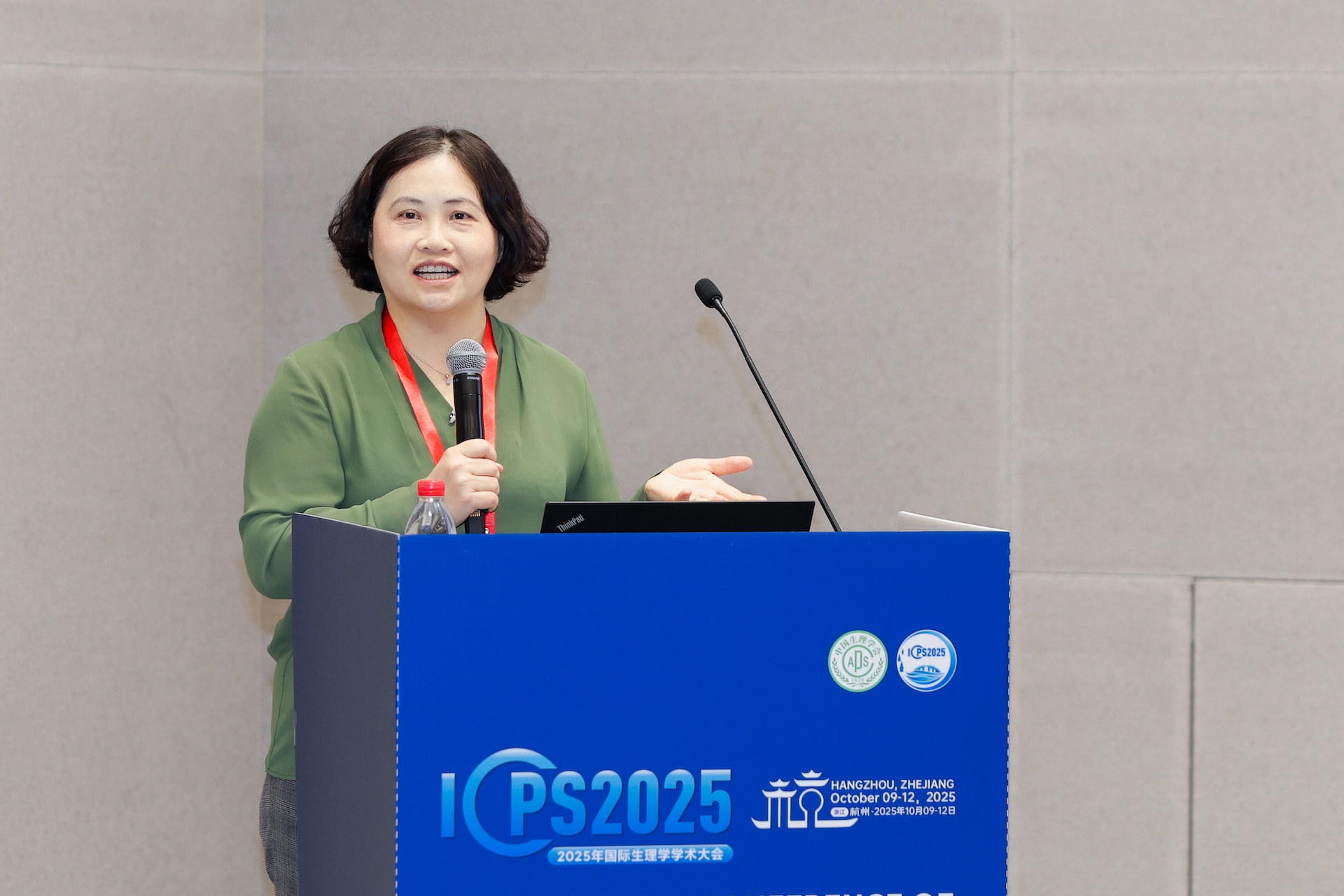
In the conference, Professor Shum co-chaired the conference section of “Lifestyle Physiology” and presented her research progress with a title as “Exploring the Functional Effects of Cellular Nutrition on Epithelial Cells and Their Relevance to Lifestyle Physiology in Reproductive Health”.
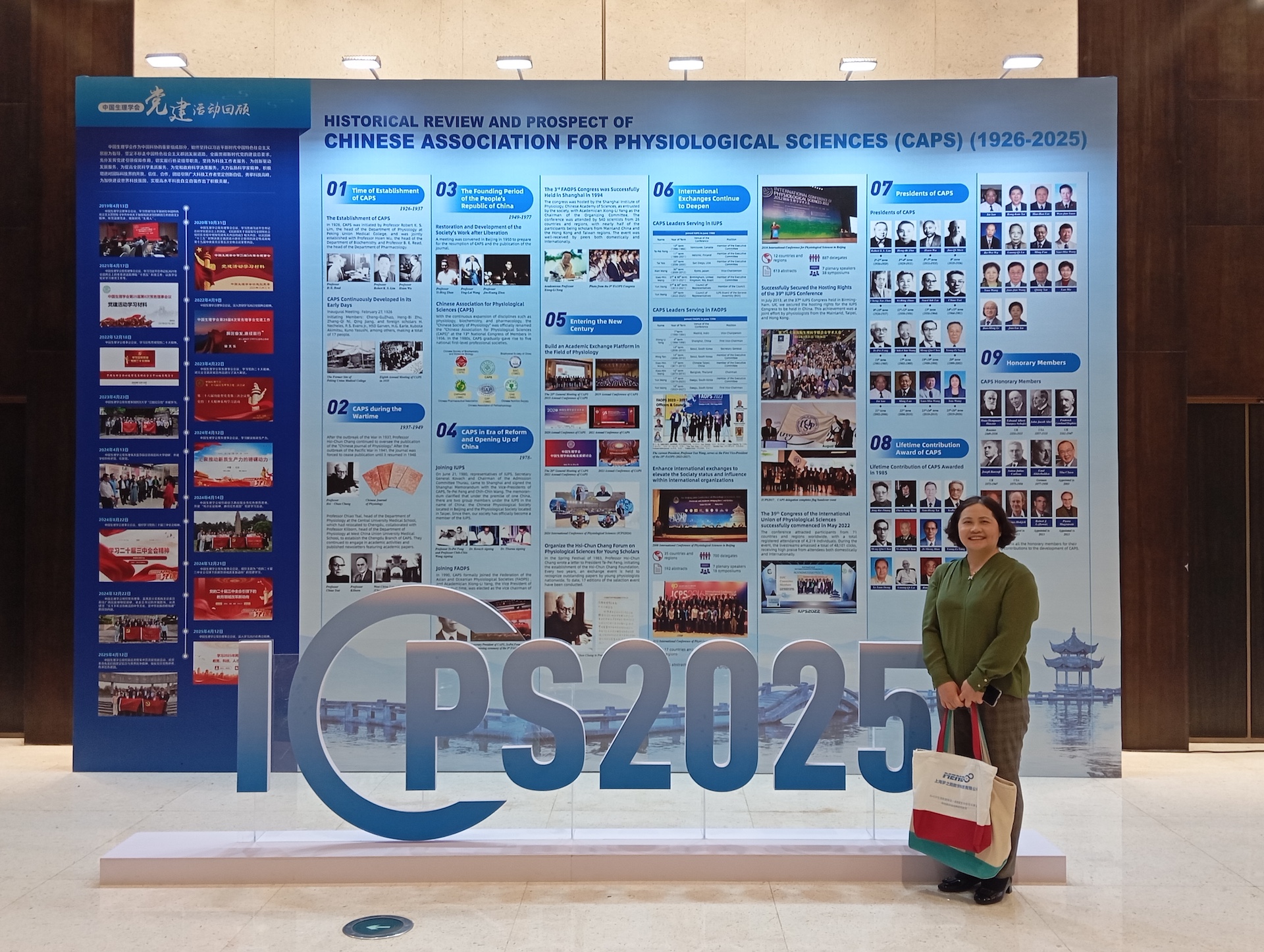
Research scholar Dr. Winnie Shum, Associate Professor from the University of Saint Joseph (USJ) Kong Hon Academy for Cellular Nutrition and Health (Cellular Nutrition Academy), participated in the 2025 International Conference of Physiological Sciences (ICPS2025) held at Hangzhou, China, from October 9 to 12, organised by the Chinese Association of Physiological Sciences.
In the conference, Professor Shum co-chaired the conference section of “Lifestyle Physiology” on October 10 and presented her research progress with a title as “Exploring the Functional Effects of Cellular Nutrition on Epithelial Cells and Their Relevance to Lifestyle Physiology in Reproductive Health”.
Lifestyle physiology is a re-emerging specialty that studies how daily choices affect physical health and overall well-being. It integrates aspects of cellular nutrition, physical activity, and stress management behaviors to achieve a physiological state that determines whether the body is healthy, suboptimal, or diseased. Cellular nutrition is known to have a significant impact on the functionality of epithelial cells, although its role in lifestyle physiology and the mechanisms behind remain to be explored. In the conference session of “Lifestyle Physiology”, Professor Shum presented her research on the role of epithelial cells in maintaining the epididymal microenvironmental homeostasis and ensuring essential nutritional balance during sperm maturation and reproductive health.
In addition, Professor Shum shared insights from her recent literature review on micronutrients and essential trace elements involved in epithelial cellular function in sperm maturation in the epididymis, emphasizing their relevance to lifestyle factors. She highlighted that utilizing epithelial cells from the male reproductive system as a research model to investigate the functional mechanisms linking cellular nutrition and lifestyle physiology can deepen our understanding the physiological roles of epithelial cells. This approach may also shed light on the causes of unhealthy conditions and aid in the development of preventive intervention strategies, thereby advancing the concept of preventive health care.