Ecological Field Trip to Hengqin International Wetland Park
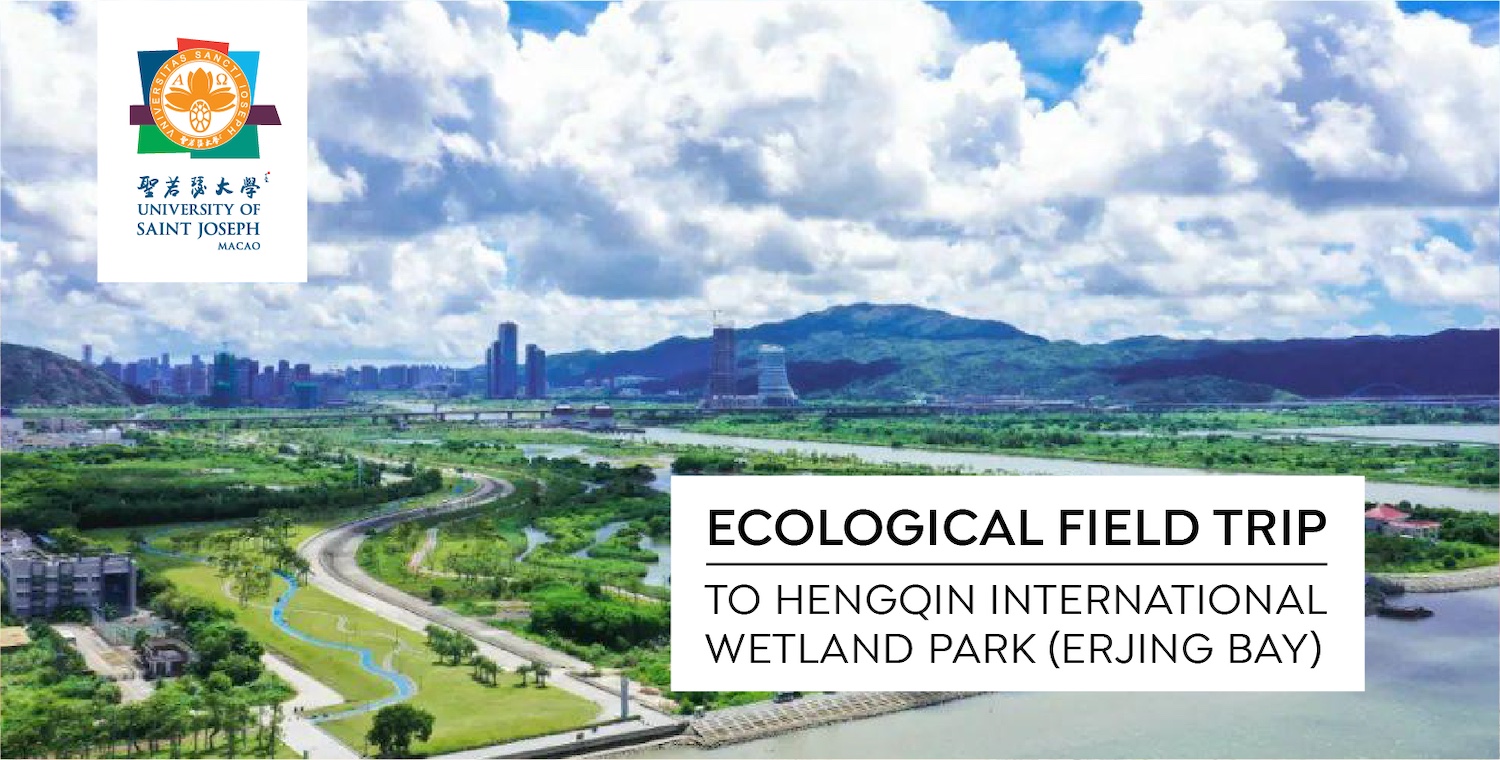
Ecological Field Trip to Hengqin International Wetland Park
29
Nov
Let’s end 2025 with purpose by joining hands for an eco-learning adventure at the Hengqin International Wetland Park (Erjing Bay)! Discover the importance of wetlands, biodiversity, and nature-based solutions in protecting our planet and building a greener, more sustainable future.
Ecological Field Trip to Hengqin International Wetland Park
The Univeristy of Saint Joseph is inviting its community of students, staff, alumni, and their families, to participate in an enriching Ecological Learning Experience at the Hengqin International Wetland Park (Erjing Bay) — a rare opportunity to explore the wonders of wetland ecosystems and the importance of nature-based solutions in sustaining life on our planet!
DETAILS:
Date: 29 November 2025 (Saturday)
Time: 9:00 – 13:00
Venue: Hengqin National Wetland Park (Erjing Bay)
Meeting point: USJ Institute of Science and Environment (USJ Nape Campus)
Cost: Free of charge
REGISTRATION:
Fill in the Registration Form to secure your spot! Space is limited, so register early to join this meaningful outdoor learning experience.
Organised by: Urban Planning and Construction Bureau of the Guangdong-Macao Deep Cooperation Zone Guangdong-Macao In-Depth Cooperation Zone in Hengqin
Co-organised by: Wide Box Macau; University of Saint Joseph (USJ); USJ Institute of Science and Environment; and USJ Green Committee
Supported by: Drop by Drop Project; Sands Eco-360; The Wash Foundation
Activity Schedule
| Time | Activity | Remarks |
| 09:00 | Assembly | Assembly location: Institute of Science and Environment (USJ Nape Campus), Shuttle bus service from ISE to Hengqin Port (Macau Side) |
| 10:00 | Departure | Hengqin Port (Macau Side) |
| 10:00-10:20 | Transportation | Shuttle bus service from Hengqin Port (North Welcome Platform) to Hengqin National Wetland Park (Erjing Bay) |
| 10:30-11:00 | Hengqin National Wetland Park (Erjing Bay) – Science Education Centre | Visit to Science Education Centre.
Introduction to Hengqin National Wetland Park (Erjing Bay) and science education (indoor). |
| 11:00-12:00 | Hengqin National Wetland Park (Erjing Bay) – Ecological Guided Tour (Outdoor Experience) | Led by USJ ecological instructors, learn about the wetland ecosystem and functions of Hengqin National Wetland Park (Erjing Bay), observe birds, insects, plants and other wetland organisms, explore the life history, structure and ecological roles of organisms, enhance environmental awareness, and understand biodiversity. |
| 12:00-12:30 | Activity Summary | Conduct ecological exchange and discussion, complete questionnaires, activity highlights summary, refreshments, and present “Ecological Experience Learning Certificates”. |
| 12:40-13:00 | Return to Macau Hengqi Border | Activity concludes, shuttle bus from Hengqin National Wetland Park (Erjing Bay) to Hengqin Port (Departure Platform). |
Guidelines
- The guided tour lasts approximately 2 hours.
- Each participant enjoys activity insurance coverage.
- The guided tour will be conducted in English.
- Should severe weather occur on the activity day (Yellow Rainstorm Warning Signal, Thunderstorm Warning, Typhoon Signal No. 3 or above), the activity will be cancelled or postponed, and notification will be provided.
- Noise, disturbance, touching or capturing wild animals and destroying their habitats are strictly prohibited.
- Dress recommendations:
- Wear light, comfortable clothing and trainers, avoid wearing flip-flops or high heels.
- It is recommended to bring hats, sunglasses, sun protection products and mosquito patches.
- Bring your own rain gear (such as raincoats or umbrellas) to cope with weather changes.
- Safety rules:
- Do not leave the group unauthorised or enter unopened areas.
- Follow instructions from teachers, and avoid touching or feeding wild animals.
- Be aware that wetland is slippery; please be careful during the activity.
- Environmental rules:
- Do not litter; maintain cleanliness of the wetland environment.
- Avoid using single-use plastic products; it is recommended to bring your own water bottles and environmentally friendly dining utensils.
- Do not pick or damage plants; respect the nature.
- Other reminders:
- Bring sufficient drinking water and snacks.
- If you have special health conditions (such as allergies, asthma, etc.), please inform our staff in advance.
Adhering to the following principles helps to achieve sustainable ecological guided tours.
- Non-Interference Principles
(I) Definition: Non-interference principles require minimising impact on the natural environment and wild flora and fauna during ecological guided tours, ensuring ecosystem balance and normal biological activities.
(II) Specific measures:
- Maintain distance: Keep a safe distance from wild animals to avoid disturbing their normal activities. Use binoculars, macro or telephoto lenses for observation according to actual conditions, reducing unnecessary close contact.
- Quiet observation: Reduce noise, avoid talking loud or making sounds. Avoid using flash photography or strong lights to prevent frightening animals or affecting their behaviour.
- Prohibit feeding: Do not feed wild animals to prevent behavioural changes or health damage. Feeding may lead animals to depend on human food, destroying their natural foraging abilities.
- Protect vegetation: Do not randomly pick plants, trample grasses or destroy habitats. Walk along designated paths to reduce damage.
- Reduce waste: Take away all rubbish to avoid environmental pollution. Use reusable water bottles and containers, reduce the use of single-use plastic products.
- Respect natural laws: Do not interfere with animal reproduction, foraging or migration behaviour. Avoid entering specific areas during sensitive seasons (such as breeding periods).
- Unnecessary capture and collection prohibited: Unless for special purposes such as scientific research, education, ecological protection, and having obtained relevant permits from the government, capturing wild animals should be avoided during ecological guided tours. During ecological guided tours, collecting any biological samples should be avoided to protect ecosystem integrity and stability.
- Safety Principles
(I) Definition: Safety principles require ensuring personal safety of all participants in guided activities whilst protecting the ecological environment.
(II) Specific measures:
- No approaching of waters: Stay away from unknown waters, strictly observe “no wading” regulations, do not enter water areas unauthorised.
- No penetration into dense forests or dense grass: Strictly follow instructions from teachers, do not deviate from routes unauthorised. Remain alert to undeveloped dense forests and dense grass areas; do not enter due to curiosity.
- No contact with animal excrement and animal carcasses: If animal carcasses or excrement are discovered, maintain distance and notify the teachers or staff members. Avoid direct contact to prevent infection from diseases or parasites.
- Walk in pairs: Avoid walking alone, ensure someone is available to assist.
- Follow instructions from teachers: Obey instructions, do not leave the team unauthorised. In case of emergencies, report to the teachers promptly and seek assistance.
- Personal protection: Wear long-sleeved clothing and long trousers to prevent mosquito bites or plant scratches. Wear hats for sun protection and to prevent objects falling from trees. Use insect repellent and sunscreen for personal protection.
- Emergency preparedness: Carry first aid kits including disinfectants, bandages, anti-allergy medications, etc. Understand basic conditions of activity areas, familiarise yourself with emergency exits and methods for seeking help.
For any enquiries, please contact:
Institute of Science and Environment, University of Saint Joseph
Rua de Londres 106, Macau
Email: usjbiodiversitywash@gmail.com
By Phone: +853 6340 6245 (Ms. Yolanda Lau) or +853 6308 8316 (Ms. Mikael Leong)