USJ Macao Launches “China-Portuguese-speaking Countries Digital Economy Seminar” to Strengthen Macao’s Role as a Platform

USJ Macao Launches "China-Portuguese-speaking Countries Digital Economy Seminar" to Strengthen Macao's Role as a Platform
27
Oct
27/10/2025
The “China-Portuguese-speaking Countries Digital Economy Seminar,” organized by the Forum for Economic and Trade Co-operation between China and Portuguese-speaking Countries (Macao) and hosted by the University of Saint Joseph (USJ), was officially launched on October 13, 2025.
The “China-Portuguese-speaking Countries Digital Economy Seminar,” organized by the Forum for Economic and Trade Co-operation between China and Portuguese-speaking Countries (Macao) and hosted by the University of Saint Joseph (USJ), was officially launched on October 13, 2025.

This initiative is designed to deepen Macao’s function as a service platform for trade cooperation between China and Portuguese-speaking countries. By gathering leading international experts in the digital economy, the program aims to foster innovative collaboration for the digital age. The seminar began with a policy overview, and participants visited the Permanent Secretariat of the Forum for Economic and Trade Co-operation between China and Portuguese-speaking Countries (Macao). Deputy Secretary-General Mr. Danilo Afonso Henriques introduced policies related to “Macao’s Platform Role,” offering attendees a firsthand understanding of the city’s bridge function in Sino-Lusophone economic and trade relations.
Powering a New Engine for Sino-Lusophone Digital Cooperation
Structured around Macao’s strategic position as a commercial platform, the seminar features a systematic curriculum focused on three core areas: digital economic development, technology transfer, and capacity building. It brings together 19 senior officials and professionals from nine Portuguese-speaking countries and the Macao SAR.
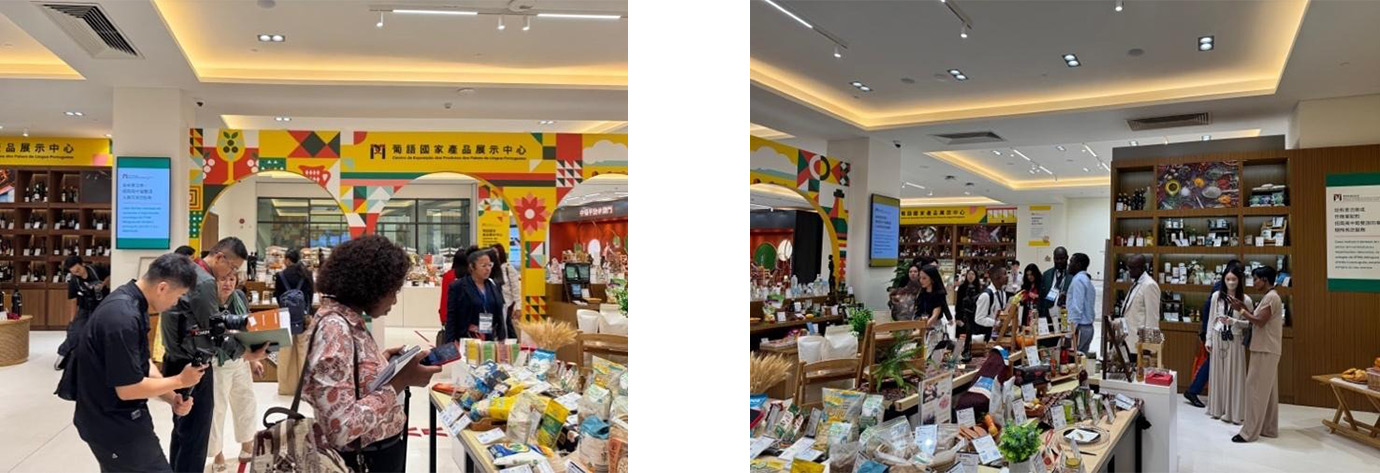
Through case studies, workshops, and field visits, the program facilitates the exchange of experiences and practical cooperation in digital economy construction. On October 16, delegates visited the Macao Trade and Investment Promotion Institute (IPIM) to learn about its specific measures and services for promoting Sino-Lusophone investment and supporting cross-border business development. This visit provided deeper insight into Macao’s unique value in connecting these markets. The delegation also toured the “Portuguese-speaking Countries Product Exhibition Centre and Macao Live Streaming Association Space” located within the Complex for Commercial and Trade Co-operation Services between China and Portuguese-speaking Countries.
Expert Insights: New Opportunities in Live-streaming E-commerce and Carbon Markets
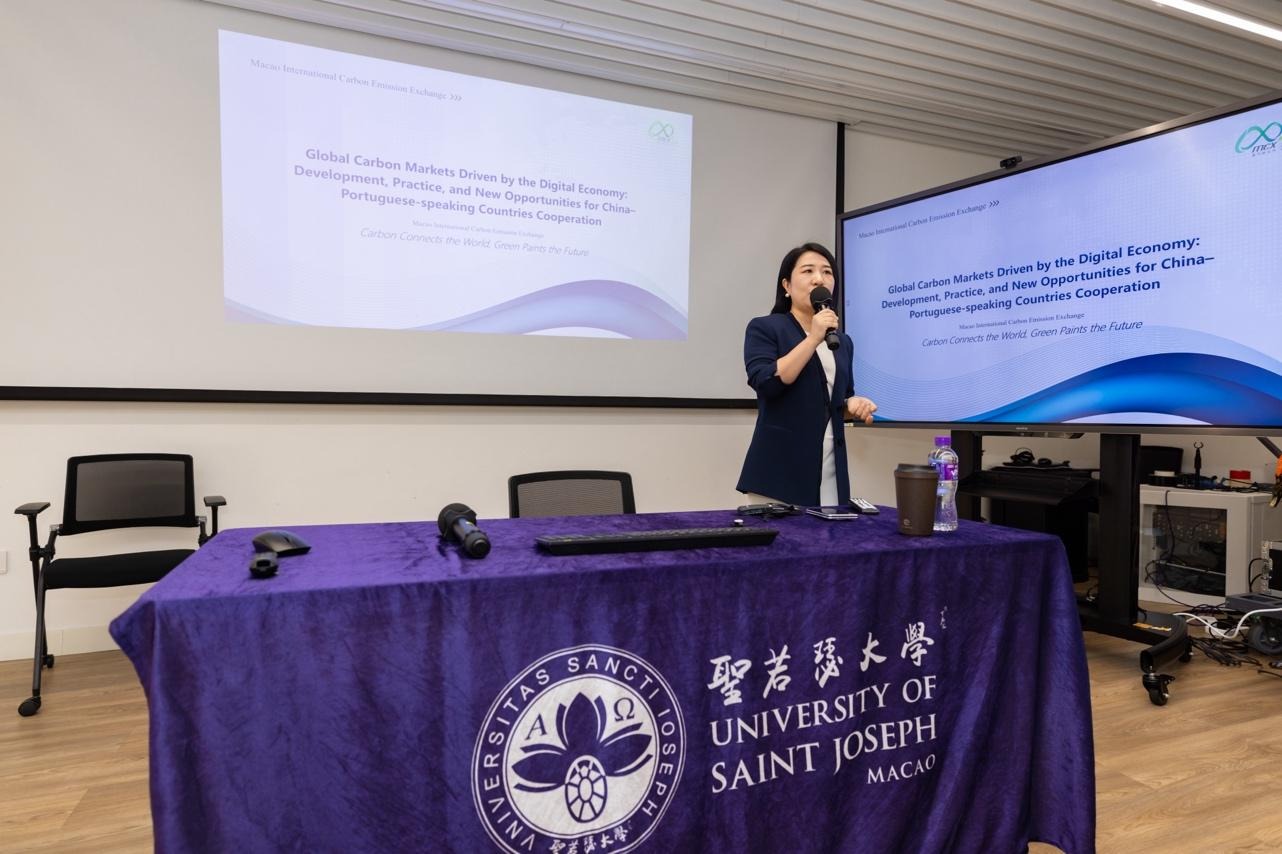
A keynote lecture on 17 October featured Ms. Meng Meng, General Manager of Macao International Carbon Exchange. She presented on “The Digitally-driven Global Carbon Market: Evolution, Practices, and New Opportunities for China-PSCs Cooperation.”
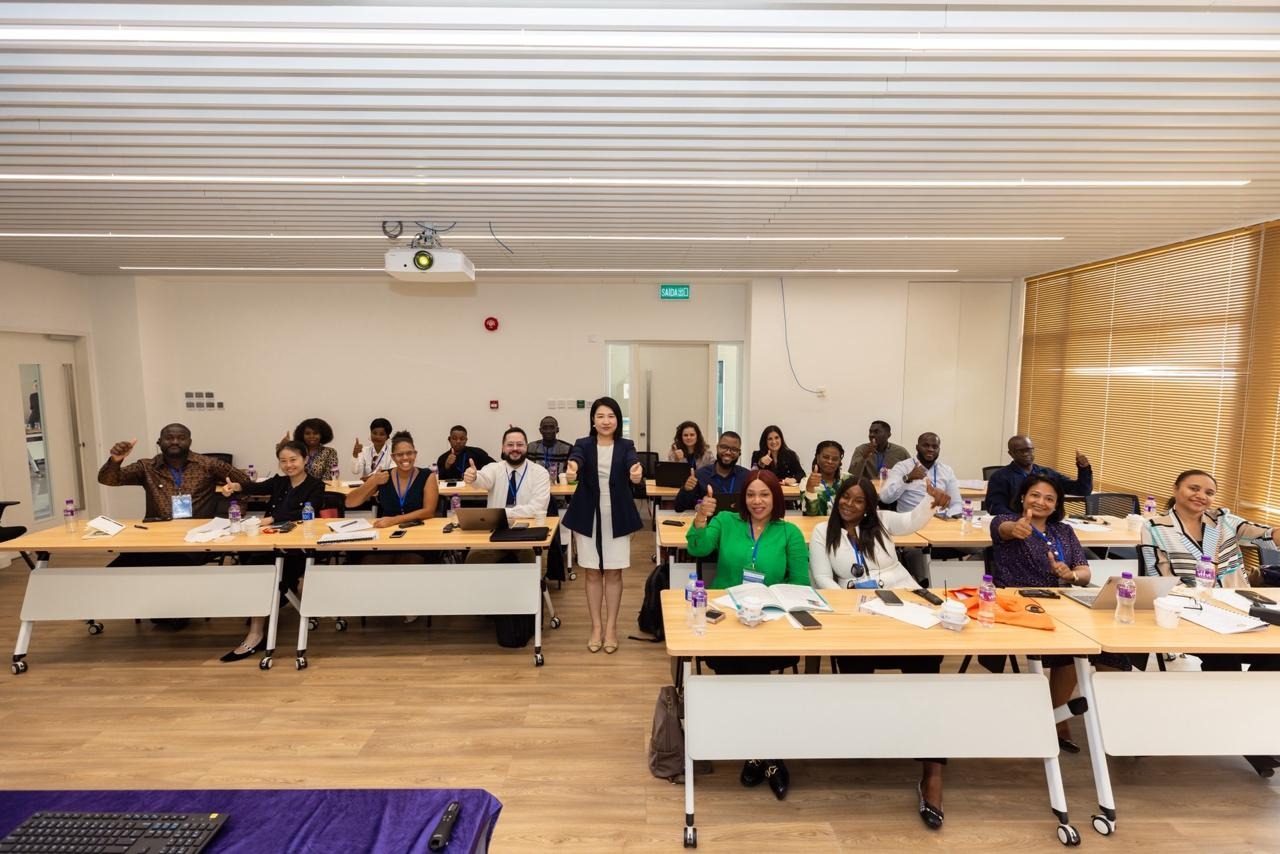
“Digital economy and carbon markets have a synergistic and deeply integrated relationship,” Ms. Mang emphasized. “The digital economy provides the technological foundation for the carbon market’s efficient operation, while the carbon market offers application scenarios and demand for digital technologies.”
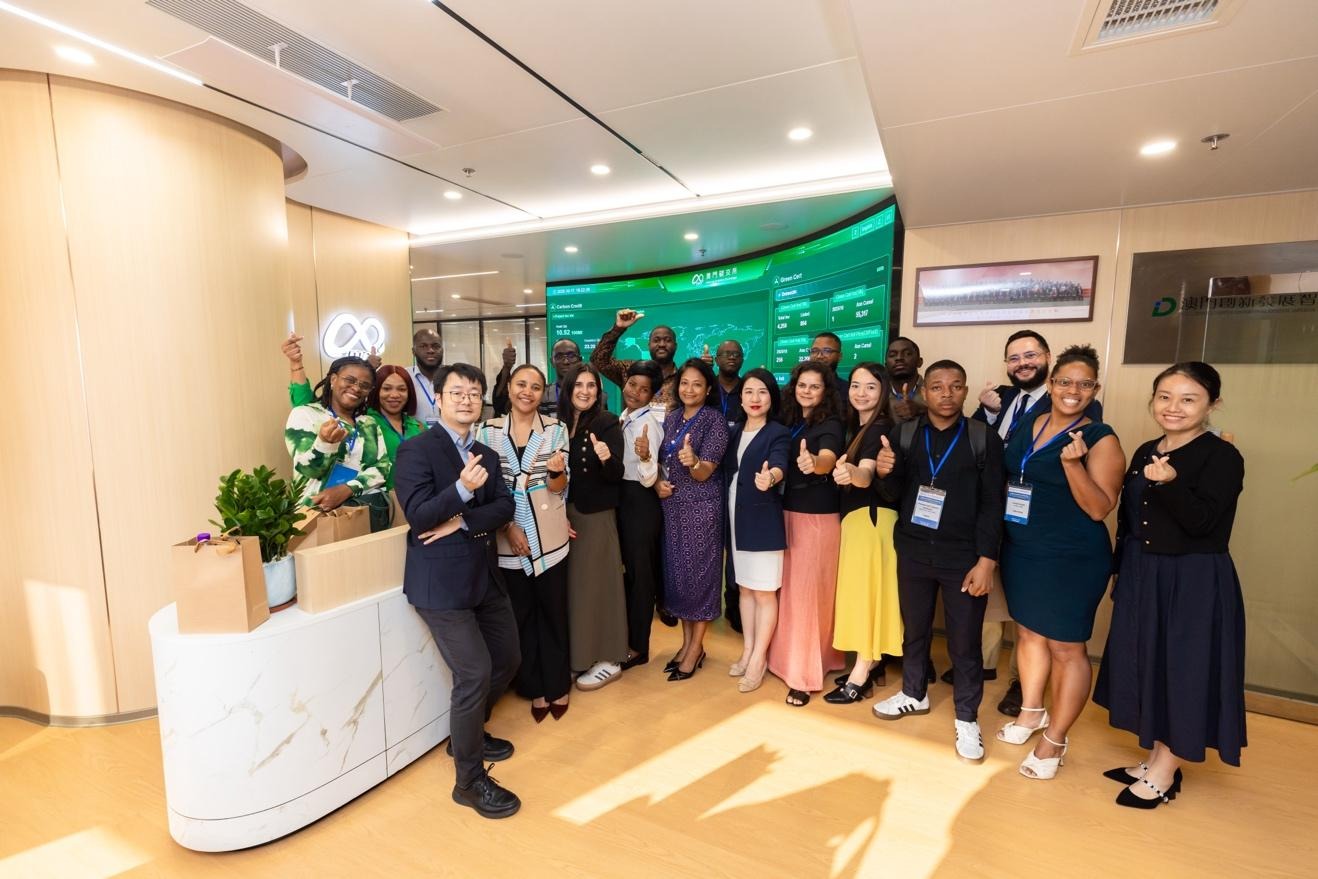
The seminar later visited the Carbon Exchange for a site inspection to gain practical knowledge of carbon market development and trading operations.
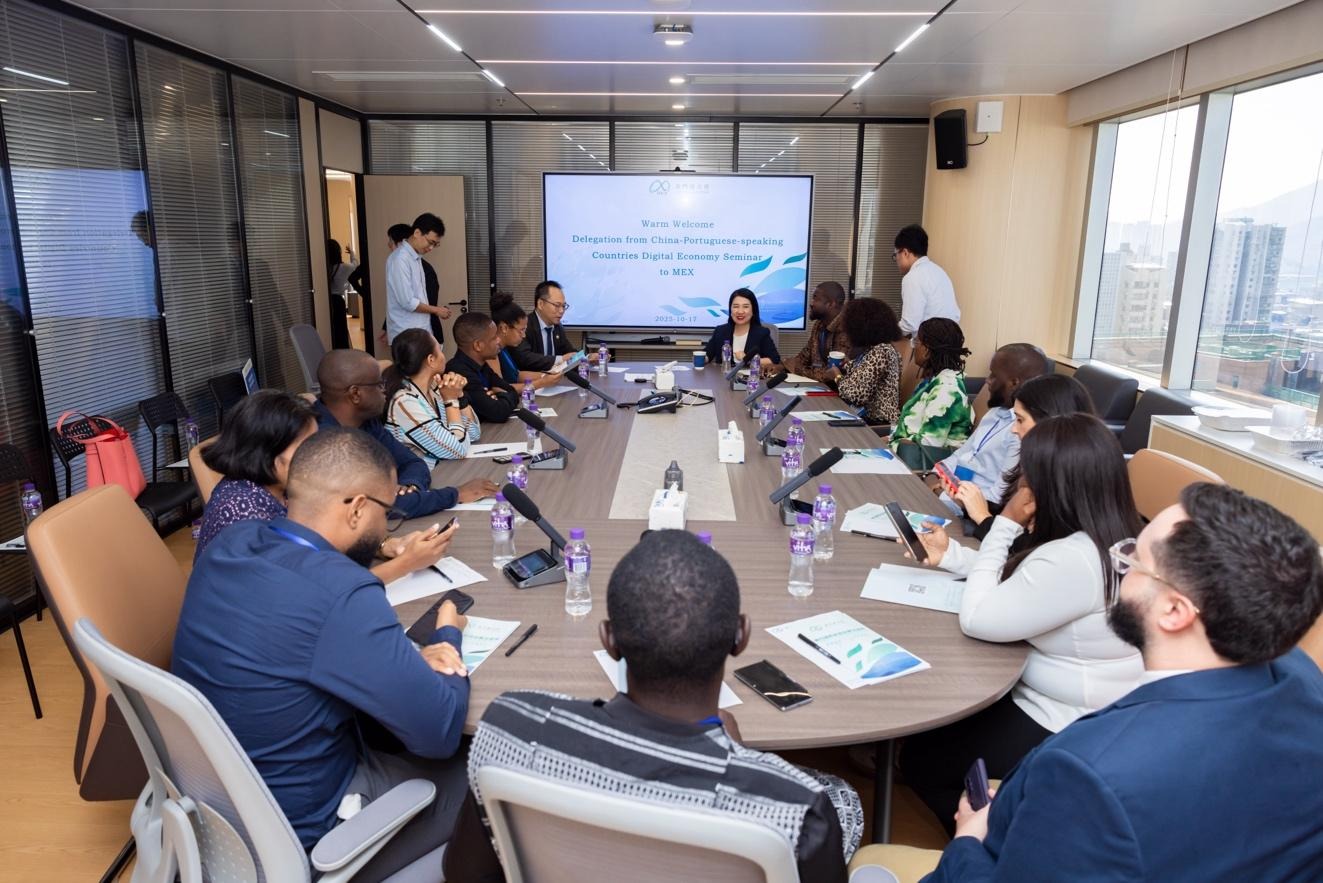
In a separate session on “Introducing Portuguese-speaking Countries’ Products to China and ASEAN Markets via Live-streaming,” Mr. Jose Rodrigues, Executive Director of the Macao Live Streaming Association, shared his success in cross-border e-commerce.
“Macao’s cross-border e-commerce services are unlocking new opportunities for Portuguese products to reach a market of over one billion consumers,” said Mr. Rodrigues. “Our standardized ordering process significantly reduces marginal costs.”

The Association has completed more than 80 live-streaming events, accumulating over 1.1 million sales orders. These results demonstrate the effectiveness of Macao’s traceable live-streaming model and its significant transaction potential.


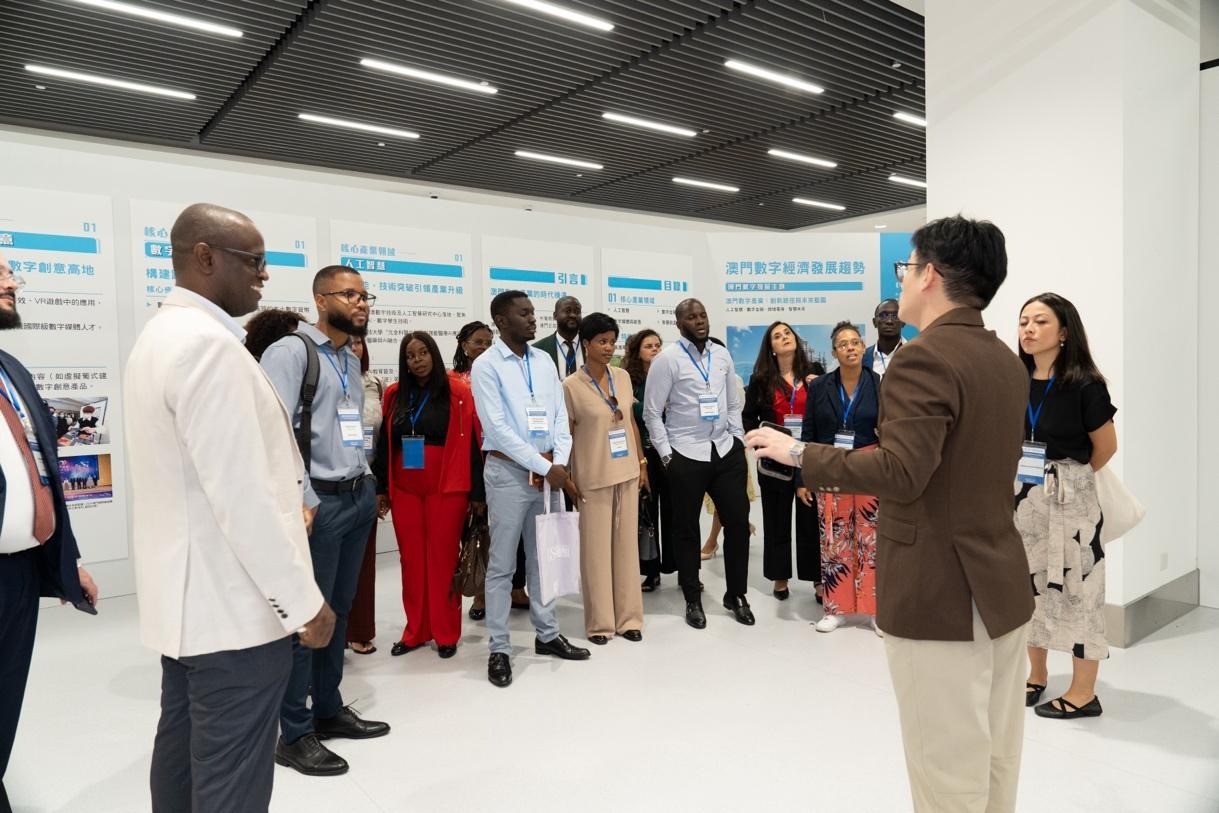
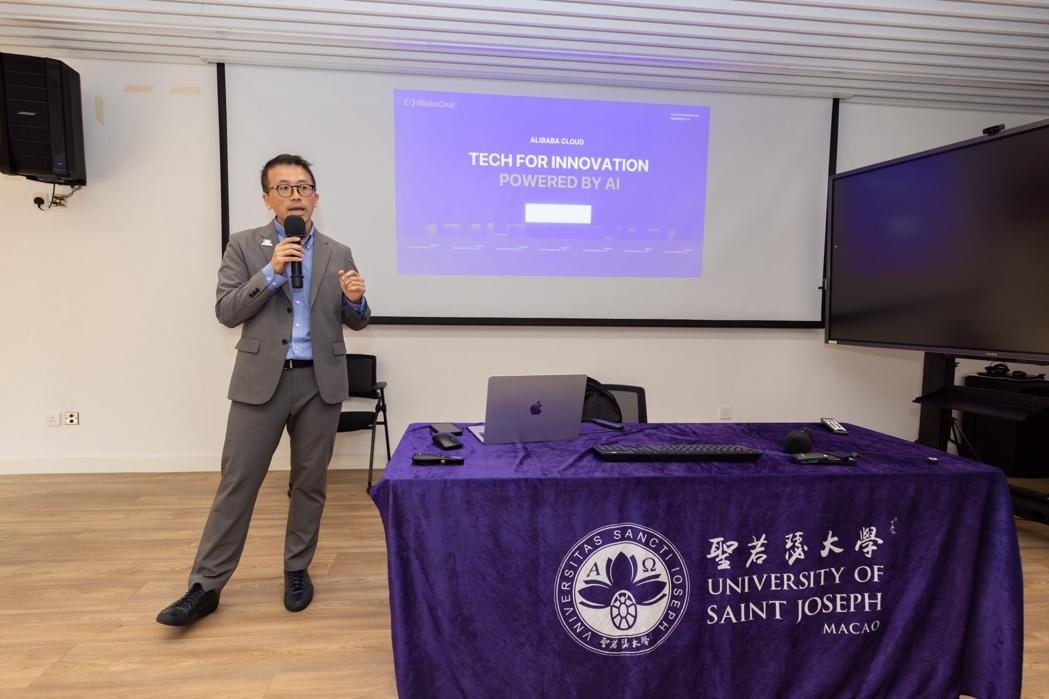
Mr. Antonio Leung, Alibaba Cloud Macau – General Manager, also engaged with participants, offering an operational overview of artificial intelligence and cloud computing, followed by an interactive exchange.
Strengthening the Platform: Connecting the Sino-Lusophone Digital Ecosystem
Seminar participants took part in several high-profile economic, trade, and academic events, including:
- The 30th Macao International Trade and Investment Fair (MIF) – to explore ongoing commercial cooperation opportunities.
- The China-Portuguese-speaking Countries SMEs Roundtable – to discuss new models of collaboration for SMEs in the digital era.
- The United Nations University 2025 AI Forum and Education Day – to participate in global discussions on the frontiers of AI development.
- The International Forum on Marine Technology and AI Industries – to explore the convergence of the Blue and Digital Economies.
The International Forum on Marine Technology and AI Industries – to explore the convergence of the Blue and Digital Economies.
A notable innovation of this seminar is its integration of digital and blue economies. The “International Forum on Marine Technology and AI Industries” on October 24 will convene high-level delegations from China and Brazil, including representatives from IPIM, the Permanent Secretariat of the Forum Macao, the President of the Future Network Innovation Institute of Xiong’an New Area, the Brazilian National Secretary of State for Aquaculture and Fisheries, and a Special Advisor from the Brazilian Ministry of Fisheries and Aquaculture.
Mr. Emil Marques, Director of the Executive Training and Lifelong Learning Office at the USJ Macao, stated, “This seminar fully demonstrates Macao’s unique value in connecting digital economy cooperation between China and Portuguese-speaking countries. We are not only imparting knowledge but also building a sustainable network, positioning Macao as a true hub for Sino-Lusophone digital economic development. Through in-depth studies on carbon markets, AI, cloud computing, and cross-border e-commerce, we are empowering participants to explore and expand collaborative ventures.”
The seminar finished on 27 October, offering a comprehensive perspective on the digital economy through specialized lectures, corporate visits, and policy discussions, cultivating a new generation of leadership for Sino-Lusophone digital advancement.